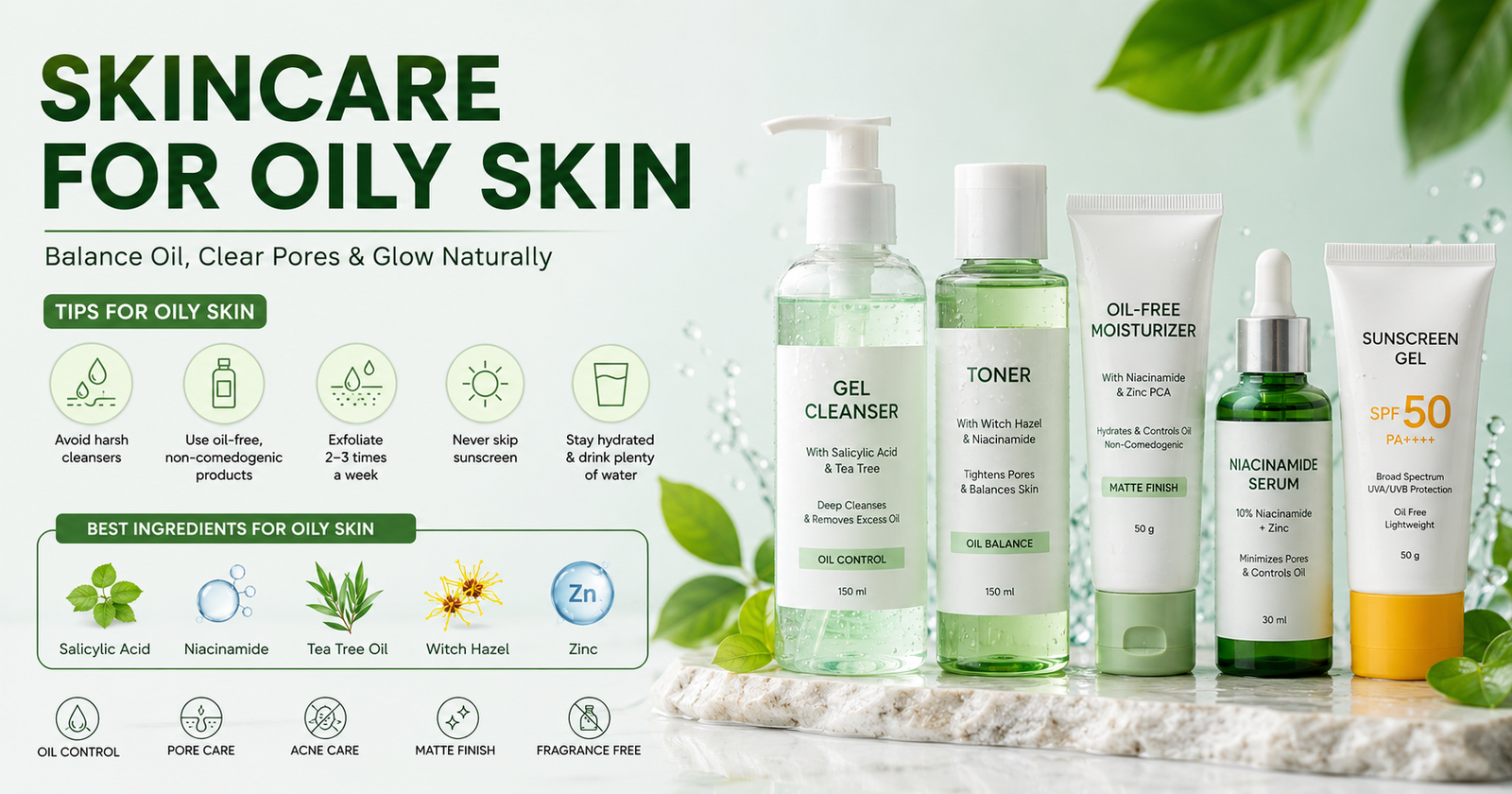
If you’re searching for the best skincare for oily skin, you’re not alone. Skincare for Oily skin is one of the most common skin concerns, causing excess shine, clogged pores, acne breakouts, and enlarged pores that can affect your confidence. The good news is that you don’t need an overly complicated routine to achieve healthy, balanced skin.
The secret to effective skincare for oily skin isn’t removing every drop of oil—it’s balancing sebum production while protecting your skin’s natural moisture barrier. Over-cleansing, harsh products, or skipping moisturizer can actually lead to a damaged skin barrier, making your skin produce even more oil.
In this dermatologist-inspired guide, you’ll learn how to build an effective daily skincare routine, discover the best ingredients for oily skin, understand what to avoid, and learn why a skin barrier repair cream can be just as important for oily skin
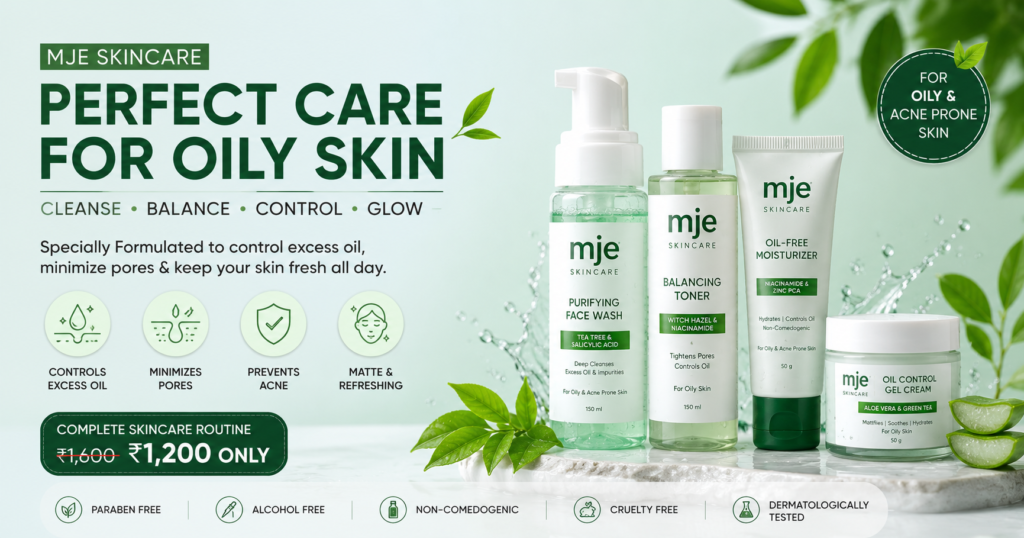
Understanding Skincare for Oily Skin
Before choosing products, it’s important to understand why your skin becomes oily.
Your skin naturally produces sebum through sebaceous glands. Sebum protects your skin, prevents water loss, and keeps it healthy. However, when these glands become overactive, they produce excess oil that mixes with dead skin cells, leading to clogged pores, acne, blackheads, whiteheads, and visibly enlarged pores.
Several factors influence oil production:
- Genetics
- Hormonal changes (androgens)
- Hot and humid climates
- Stress
- Overwashing
- Using harsh skincare products
- Skipping moisturizer
Many people mistakenly believe oily skin doesn’t need hydration. In reality, dehydrated skin often produces even more oil to compensate.
Why Your Skin Gets So Oily
Hormones called androgens stimulate your sebaceous glands to produce oil. Although commonly known as male hormones, everyone has them.
When androgen activity increases, your skin produces more sebum than necessary.
The excess oil:
- Enlarges pores
- Traps dirt and dead skin cells
- Causes blackheads
- Triggers acne
- Leaves your face looking shiny throughout the day
This is why the goal of skincare for oily skin is oil control—not complete oil removal.
The Best Daily Skincare for Oily Skin Routine
Step 1: Cleanse Twice Daily
Cleansing is the foundation of every effective skincare for oily skin routine.
Wash your face every morning and evening using a gentle gel or foaming cleanser for skincare for oily skin.
Look for ingredients like:
- Salicylic Acid (BHA)
- Niacinamide
- Zinc PCA
- Tea Tree
- Gentle surfactants
Salicylic acid penetrates deep into oily pores, dissolving excess sebum while reducing blackheads and acne.
Avoid harsh soaps that leave your face feeling tight, as this may indicate a damaged skin barrier.
Step 2: Apply an Oil-Control Toner
A toner isn’t mandatory, but it can improve oily skin when formulated correctly.
Choose alcohol-free toners containing:
- Niacinamide
- Salicylic Acid
- Witch Hazel
- PHAs
- Glycolic Acid
- Lactic Acid
Benefits include:
- Removes leftover impurities
- Refines enlarged pores
- Reduces shine
- Improves skin texture
- Balances skin pH
Step 3: Use a Niacinamide Serum
Niacinamide is one of the most dermatologist-recommended ingredients for skincare for oily skin.
Benefits include:
- Controls oil production
- Minimizes enlarged pores
- Strengthens the moisture barrier
- Reduces redness
- Fades acne marks
- Improves skin texture
Niacinamide pairs exceptionally well with salicylic acid for oily and acne-prone skin.
Step 4: Moisturize Every Day
One of the biggest skincare for oily skin myths is that oily skin doesn’t need moisturizer.
Skipping moisturizer can worsen oiliness because dehydrated skin produces more sebum. It is best for Skincare for oily skin.
Choose:
- Lightweight gels
- Water-based moisturizers
- Oil-free formulas
- Non-comedogenic products
Look for ingredients such as:
- Hyaluronic Acid
- Ceramides
- Glycerin
- Aloe Vera
- Panthenol
If your skin feels irritated or overly dry from acne treatments, using a skin barrier repair cream at night can restore hydration without clogging pores.
Step 5: Never Skip Sunscreen
Daily sunscreen is essential for every skin type.
Choose:
- SPF 30–50
- Oil-free sunscreen
- Gel-based sunscreen
- Matte finish
- Broad-spectrum UVA/UVB protection
Sunscreen helps prevent:
- Acne marks
- Hyperpigmentation
- Premature aging
- Barrier damage
Weekly Treatments for Skincare for Oily Skin
Besides your daily routine, include weekly treatments.
Exfoliate 2–3 Times Weekly
Chemical exfoliants work better than physical scrubs.
Recommended:
- Salicylic Acid (BHA)
- Glycolic Acid (AHA)
- Lactic Acid
Benefits:
- Removes dead skin
- Prevents clogged pores
- Improves skin texture
- Reduces enlarged pores
Avoid over-exfoliating, as it may cause a damaged skin barrier.
Clay Masks
Clay masks absorb excess oil and reduce shine. they are best for skincare for oily skin.
Ideal ingredients include:
- Kaolin Clay
- Bentonite Clay
Use once or twice weekly.
Ingredients That Work Best forSkincare for Oily Skin
Salicylic Acid
One of the best ingredients for skincare for oily skin because it:
- Unclogs pores
- Reduces blackheads
- Prevents acne
- Controls oil
Niacinamide
Helps:
- Balance oil
- Improve skin barrier
- Reduce inflammation
- Minimize enlarged pores
Hyaluronic Acid
Hydrates without feeling greasy.
Perfect for oily skin experiencing dehydration.
Ceramides
Ceramides strengthen the moisture barrier and are especially helpful if your skin feels irritated after acne treatments.
Retinol
Retinol helps:
- Improve skin texture
- Reduce acne
- Minimize enlarged pores
- Fade post-acne marks
Use only at night and introduce gradually.
Signs You Have a Damaged Skin Barrier
Many people with oily skin unknowingly develop a damaged skin barrier from over-cleansing or using too many active ingredients.
Common signs include:
- Tight skin
- Burning sensation
- Redness
- Increased sensitivity
- Flaking
- More oil than usual
- Frequent irritation
Ironically, damaged skin often becomes even oilier.
How to Repair a Damaged Skin Barrier
If your skin barrier is compromised:
- Reduce exfoliation
- Pause strong acids temporarily
- Use gentle cleansers
- Moisturize consistently
- Wear sunscreen daily
- Add a skin barrier repair cream containing ceramides, panthenol, cholesterol, or fatty acids.
A quality skin barrier repair cream helps restore the protective layer, reduces irritation, and improves overall skin health without making oily skin greasy.
Common Mistakes to Avoid
Avoid these habits if you have oily skin:
- Over-washing your face
- Skipping moisturizer
- Using alcohol-based products
- Applying heavy creams
- Touching your face frequently
- Over-exfoliating
- Sleeping with makeup
- Ignoring sunscreen
These habits can worsen oil production and contribute to a damaged skin barrier.
Lifestyle Tips for Oily Skin
Healthy skin isn’t only about skincare.
Support your routine by:
- Drinking enough water
- Managing stress
- Sleeping 7–9 hours
- Eating antioxidant-rich foods
- Limiting sugary processed foods
- Cleaning makeup brushes regularly
- Changing pillowcases weekly
Frequently Asked Questions
Does oily skin need moisturizer?
Yes. Moisturizer helps maintain hydration and prevents your skin from producing excess oil. Lightweight, oil-free formulas are ideal.
Can oily skin have a damaged skin barrier?
Absolutely. Excessive cleansing, over-exfoliation, and strong acne treatments can weaken your barrier, leading to irritation and even more oil production.
What is the best ingredient for enlarged pores?
Niacinamide, salicylic acid, and retinol are among the most effective ingredients for reducing the appearance of enlarged pores over time.
Should I use a skin barrier repair cream if I have oily skin?
Yes. If your skin feels irritated, tight, or sensitive, a lightweight skin barrier repair cream with ceramides can help restore your barrier without clogging pores.
Is sunscreen necessary for oily skin?
Yes. An oil-free, non-comedogenic sunscreen protects against UV damage, post-acne marks, and premature aging.
Final Thoughts
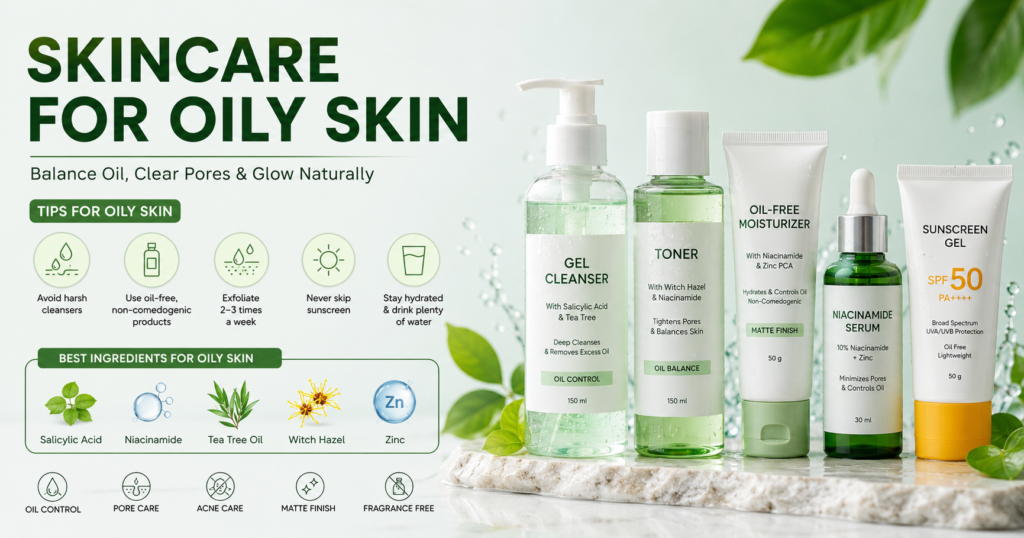
Building an effective skincare for oily skin routine doesn’t require dozens of products. A gentle cleanser, oil-balancing serum, lightweight moisturizer, sunscreen, and occasional exfoliation are enough for most people.
The key is consistency rather than aggressive treatments. By controlling oil without stripping your skin, minimizing enlarged pores, and protecting your moisture barrier with the right products—including a skin barrier repair cream when needed—you can achieve healthier, clearer, and more balanced skin over time.
SEO Notes:
- Focus keyword “skincare for oily skin” starts the title and opening paragraph.
- LSI keywords naturally included: skin barrier repair cream, damaged skin barrier, enlarged pores.
- The article follows EEAT principles with medically accepted skincare guidance, clear headings, user-friendly language, and natural keyword placement without excessive repetition.
No Responses