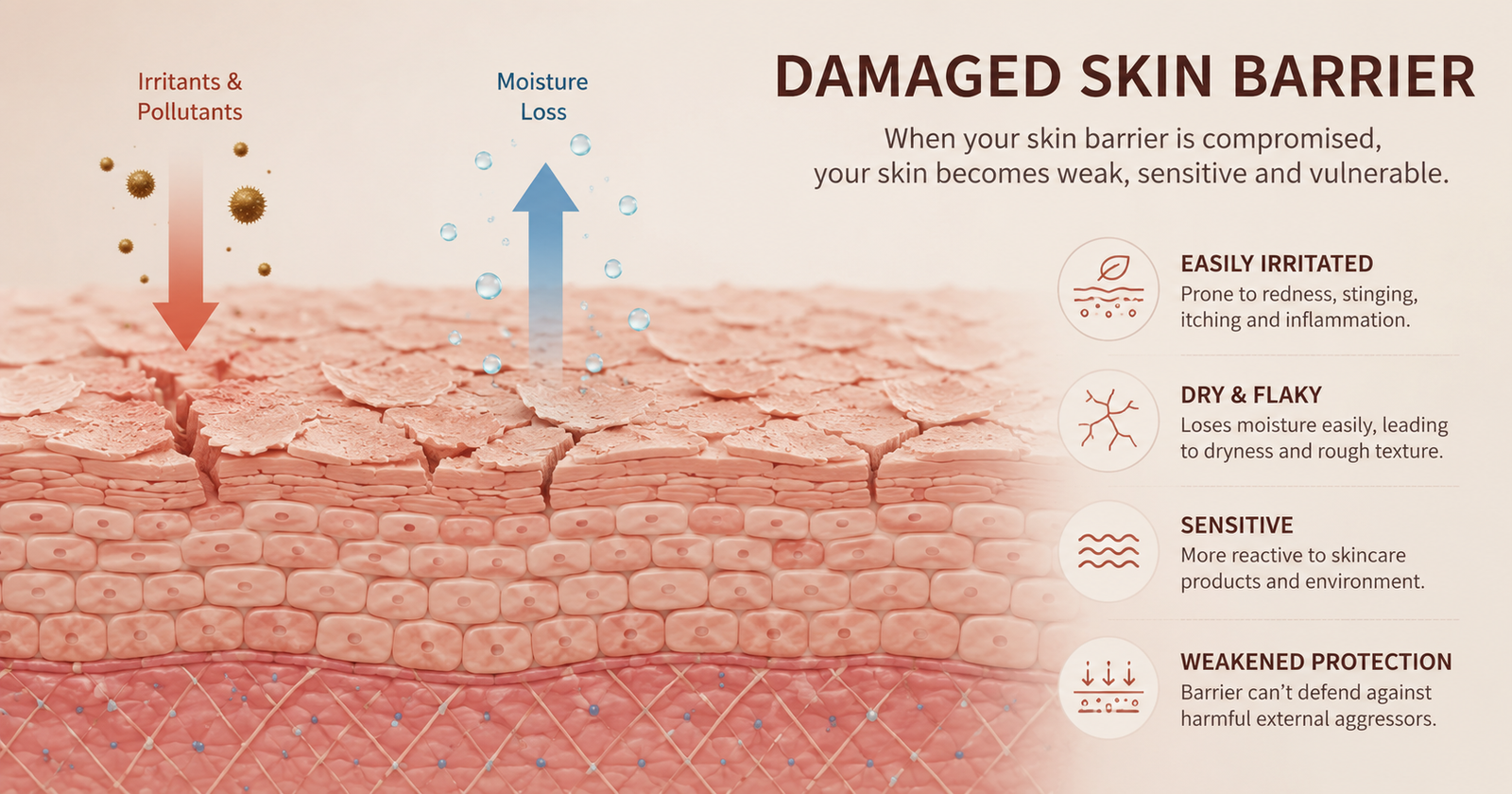
A damaged skin barrier is one of the most common reasons behind dry, irritated, sensitive, and dull-looking skin. Many people spend money on different skincare products without realizing that the real problem is a weakened skin barrier. When your skin’s natural protective layer is compromised, it struggles to retain moisture and defend itself against environmental stressors, resulting in discomfort and visible skin concerns.
If you’ve noticed persistent dryness, redness, tightness, irritation, or even enlarged pores, your skin barrier may need immediate attention. The good news is that with the right skincare routine and a high-quality skin barrier repair cream, your skin can recover and become healthier, stronger, and more resilient.
In this comprehensive guide, you’ll learn everything you need to know about a damaged skin barrier, including its causes, symptoms, treatment, prevention tips, and how the right ingredients can restore your skin’s natural balance.
What Is a Damaged Skin Barrier?
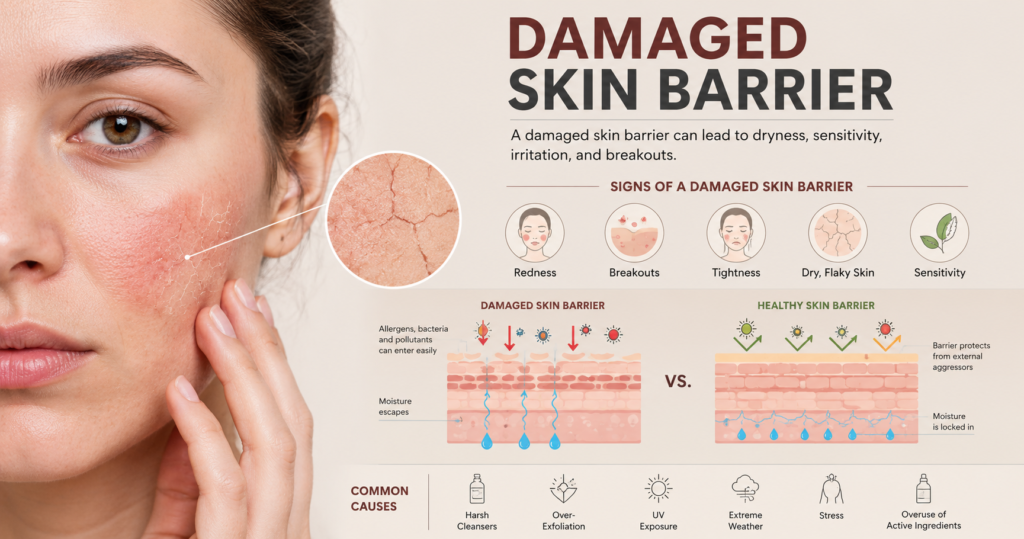
Your damaged skin barrier, also called the moisture barrier or protective barrier, is the outermost layer of your skin. Think of it like a brick wall.
- Skin cells are the bricks.
- Natural lipids such as ceramides, cholesterol, and fatty acids act as the mortar.
Together, they create a protective shield that:
- Locks moisture inside the skin
- Prevents excessive water loss
- Blocks bacteria, pollutants, allergens, and irritants
- Supports healthy skin function
- Maintains smooth, hydrated skin
When this barrier becomes damaged, moisture escapes quickly while harmful substances penetrate more easily. This leads to dehydration, irritation, inflammation, and increased skin sensitivity.
What Causes a Damaged Skin Barrier?
Several everyday habits and environmental factors can weaken your skin barrier.
1. Over-Exfoliation
Using exfoliating acids, scrubs, or peeling products too often strips away essential protective lipids.
2. Harsh Cleansers
Foaming cleansers containing strong detergents remove your skin’s natural oils and weaken the barrier.
3. Excessive Active Ingredients
Using multiple active ingredients together, such as:
- Retinol
- AHAs
- BHAs
- Strong Vitamin C formulas
can overwhelm your skin.
4. Sun Exposure
UV rays damage skin proteins and lipids, making the skin barrier thinner over time.
5. Pollution
Environmental pollutants create oxidative stress that weakens the skin’s natural defenses.
6. Hot Water
Long hot showers strip away natural oils that protect your skin.
7. Chlorinated Water
Frequent swimming can remove protective lipids from the skin.
8. Hard Water
Minerals like calcium and magnesium may contribute to dryness and irritation.
9. Poor Diet
A diet lacking healthy fats may reduce the building blocks your skin needs.
10. Lack of Sleep
Your skin repairs itself while you sleep. Poor sleep slows barrier recovery.
Signs of a Damaged Skin Barrier
A compromised barrier often shows several symptoms.
Common signs include:
- Dry skin
- Flaky patches
- Tightness after washing
- Redness
- Burning sensation
- Itching
- Increased sensitivity
- Rough texture
- Dull complexion
- Frequent breakouts
- Slow healing
- Skin feels better after applying moisturizer
- Skin stings when using products
Many people also notice large pores on face becoming more visible. While pores don’t actually change size permanently, dehydrated skin loses firmness, making enlarged pores appear more noticeable.
Can a Damaged Skin Barrier Cause Enlarged Pores?
Yes.
When your skin becomes dehydrated, it loses elasticity. Without enough hydration and lipids, pores appear larger because the surrounding skin lacks support.
A healthy skin barrier keeps the skin plump and hydrated, making large pores on face appear less visible naturally.
Using a nourishing skin barrier repair cream can improve hydration and skin texture, helping pores look smoother over time.
Why Skin Barrier Repair Matters
A healthy barrier does much more than prevent dryness.
It also helps:
- Maintain skin hydration
- Reduce irritation
- Calm redness
- Improve skin texture
- Strengthen resilience
- Minimize moisture loss
- Support faster recovery
- Improve overall skin appearance
- Protect against environmental damage
Without repairing the barrier, many skincare products become less effective because irritated skin cannot tolerate active ingredients.
How to Repair a Damaged Skin Barrier
Healing takes consistency rather than aggressive treatments.
Simplify Your Routine
Avoid unnecessary products for a few weeks.
Focus only on:
- Gentle cleanser
- Hydrating serum
- Skin barrier repair cream
- Broad-spectrum sunscreen
Less is often more.
Choose a Skin Barrier Repair Cream
A high-quality skin barrier repair cream provides the lipids your skin needs to rebuild its protective layer.
Look for formulas containing:
- Ceramides
- Cholesterol
- Fatty acids
- Squalane
- Panthenol
- Glycerin
- Hyaluronic acid
- Niacinamide
- Shea butter
These ingredients work together to reduce moisture loss and strengthen the skin barrier.
Hydrate Your Skin Daily
Hydration is essential because damaged skin loses water much faster.
Ingredients that attract moisture include:
- Hyaluronic Acid
- Glycerin
- Aloe Vera
- Panthenol
After applying hydrating products, seal everything with a rich skin barrier repair cream.
Stop Over-Exfoliating
Temporarily avoid:
- Scrubs
- AHAs
- BHAs
- Peels
- Strong retinoids
Once your skin heals, reintroduce them gradually.
Use Lukewarm Water
Very hot water removes protective oils.
Wash your face with lukewarm water instead.
Protect Your Skin from the Sun
Daily sunscreen helps prevent further barrier damage.
Choose SPF 30 or higher every morning, even on cloudy days.
Eat Healthy Fats
Healthy skin begins from within.
Include foods rich in:
- Omega-3 fatty acids
- Avocados
- Nuts
- Seeds
- Olive oil
These nutrients support healthy skin lipid production.
Prioritize Sleep
Quality sleep allows your skin to repair itself naturally overnight.
Aim for 7–9 hours each night.
Best Ingredients for Barrier Repair
When shopping for skincare, prioritize products containing:
Ceramides
Restore the skin’s natural protective lipids.
Niacinamide
Strengthens the skin barrier while reducing redness and improving uneven texture.
Hyaluronic Acid
Boosts hydration and improves skin elasticity.
Panthenol
Calms irritated skin and promotes healing.
Squalane
Prevents moisture loss without feeling greasy.
Fatty Acids
Help rebuild the protective lipid layer.
Cholesterol
Works alongside ceramides to restore barrier integrity.
Ingredients to Avoid While Healing
Until your barrier recovers, avoid products containing:
- Alcohol-based formulas
- Strong fragrances
- Essential oils
- Harsh soaps
- Overly foaming cleansers
- High-strength acids
- Frequent exfoliants
How Long Does It Take to Repair a Damaged Skin Barrier?
Recovery depends on how severely your barrier has been compromised.
Generally:
- Mild damage: 2–4 weeks
- Moderate damage: 4–8 weeks
- Severe damage: Several months
Consistency is far more important than using many products.
Daily Routine for a Damaged Skin Barrier
Morning
- Gentle cleanser
- Hydrating serum
- Skin barrier repair cream
- Sunscreen SPF 30+
Evening
- Gentle cleanser
- Hydrating serum
- Rich skin barrier repair cream
Avoid adding unnecessary products until your skin fully recovers.
Frequently Asked Questions
Can a damaged skin barrier heal naturally?
Yes. Your skin naturally repairs itself, but using a skin barrier repair cream and avoiding irritating products can significantly speed up recovery.
Can damaged skin barrier cause acne?
Yes. A weakened barrier increases inflammation and disrupts the skin’s natural balance, making breakouts more likely.
Why do my pores look bigger after my skin becomes dry?
Dehydrated skin loses firmness, making enlarged pores and large pores on face appear more visible.
Should I stop using retinol?
If your skin is irritated, it’s best to pause retinol until your barrier has recovered.
Final Thoughts
A damaged skin barrier affects far more than just dryness. It can lead to redness, irritation, dehydration, sensitivity, breakouts, uneven texture, and the appearance of enlarged pores. The good news is that your skin has an incredible ability to repair itself when given the right support.
By simplifying your skincare routine, avoiding harsh ingredients, staying hydrated, protecting your skin from UV damage, and using a nourishing skin barrier repair cream with ceramides, niacinamide, fatty acids, and hyaluronic acid, you can restore your skin’s natural defenses and enjoy healthier, smoother, and more resilient skin.
Healthy skin starts with a healthy barrier, and caring for it today helps protect your skin for years to come.
No Responses