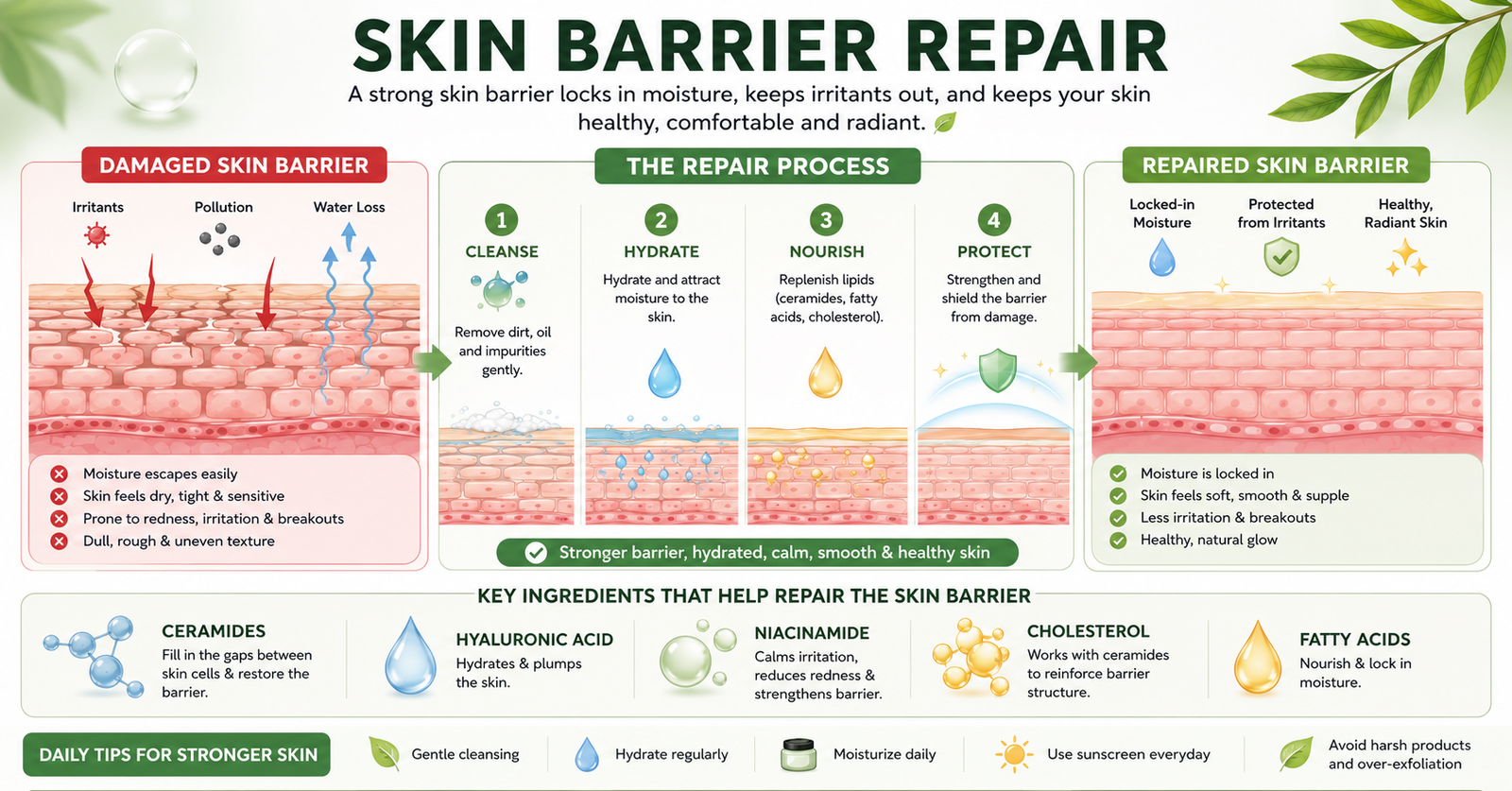
If your skin constantly feels dry, tight, irritated, or looks rough despite using expensive skincare products, a skin barrier repair cream could be the missing step in your routine. Many people assume they simply need a richer moisturizer, but in reality, the problem often starts with a damaged skin barrier that cannot retain moisture or defend itself against daily environmental stressors.
A healthy skin barrier locks hydration inside the skin while protecting it from pollution, UV exposure, harsh weather, bacteria, and irritants. Once this protective layer becomes compromised, water escapes more easily, your skin becomes increasingly sensitive, and concerns such as enlarged pores, large pores on face, redness, dryness, and unexpected breakouts often become more noticeable.
In this guide, you’ll learn what a skin barrier repair cream does, how it differs from a regular moisturizer, the ingredients that actually strengthen the skin barrier, and how to choose the right formula for your skin type.
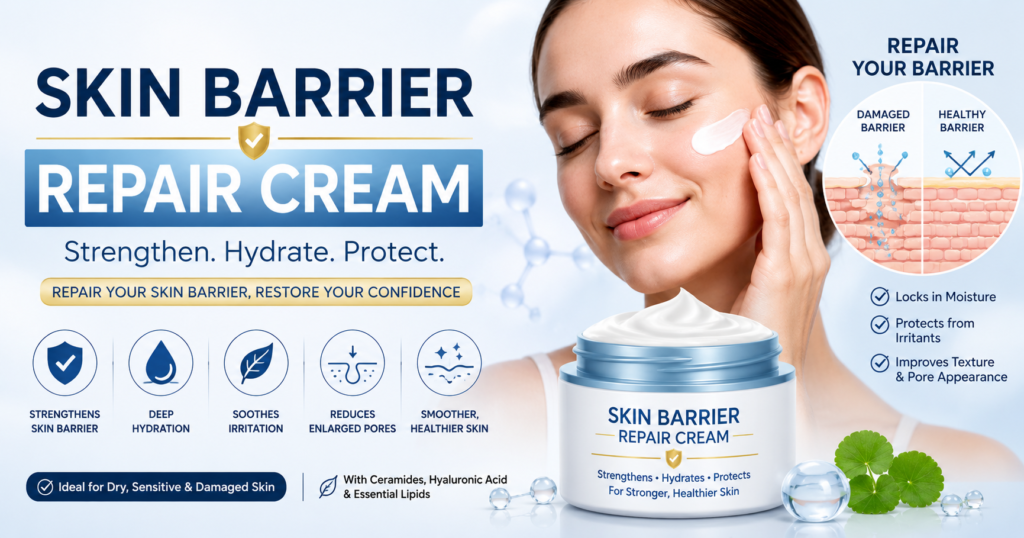
What Is a Skin Barrier Repair Cream?
A skin barrier repair cream is a specialized moisturizer formulated to rebuild and strengthen your skin’s natural protective barrier, also called the stratum corneum.
Think of your skin as a brick wall.
- Skin cells act as the bricks.
- Lipids such as ceramides, cholesterol, and fatty acids act as the mortar.
When this “mortar” becomes damaged, tiny gaps develop between skin cells. These gaps allow moisture to escape while letting environmental irritants penetrate the skin more easily. A quality skin barrier repair cream replenishes these essential lipids, helping restore the skin’s natural defense system.
Unlike ordinary moisturizers that provide temporary hydration, barrier creams focus on repairing the root cause of persistent dryness and sensitivity.
Why Is the Skin Barrier So Important?
Your skin barrier performs several essential functions every day.
It helps:
- Prevent transepidermal water loss (TEWL)
- Keep skin hydrated for longer
- Protect against bacteria and pollution
- Reduce irritation from environmental stressors
- Support healthy skin renewal
- Improve overall skin texture
When your barrier is healthy, your complexion feels comfortable, appears smoother, and is less reactive to skincare products.
What Causes a Damaged Skin Barrier?
A damaged skin barrier usually develops gradually rather than overnight. Multiple factors can weaken it over time.
Over-Exfoliation
Using scrubs, AHAs, BHAs, or exfoliating acids too frequently strips away the protective lipid layer.
Strong Cleansers
Harsh soaps and high-pH cleansers remove your skin’s natural oils, leaving it vulnerable to moisture loss.
Hot Water
Long, hot showers can dissolve protective lipids that keep your skin healthy.
Weather Changes
Cold temperatures, dry air, strong winds, and excessive air conditioning all contribute to barrier damage.
Sun Exposure
UV rays gradually weaken the skin’s protective structure.
Aging
As we age, natural ceramide production decreases, making it harder for skin to retain hydration.
Stress
High stress levels can influence skin health and reduce its resilience.
Signs Your Skin Barrier Needs Repair
Many people confuse dehydration with dryness. The following symptoms often indicate a damaged skin barrier rather than simply dry skin.
Common signs include:
- Tightness after cleansing
- Persistent dryness
- Flaky patches
- Redness
- Burning or stinging from products
- Increased sensitivity
- Rough texture
- Unexpected breakouts
- Dull-looking skin
You may also notice that enlarged pores appear more visible. While barrier damage doesn’t directly create pores, dehydrated and inflamed skin can make large pores on face stand out more.
Can a Skin Barrier Repair Cream Help Enlarged Pores?
One common question is whether a skin barrier repair cream can improve enlarged pores.
The answer is yes—to some extent.
When your skin lacks hydration, it loses elasticity and appears rougher. This often makes large pores on face look deeper and more noticeable.
A barrier repair cream helps by:
- Restoring moisture balance
- Improving skin texture
- Reducing inflammation
- Supporting smoother-looking skin
- Improving skin elasticity over time
Although it won’t permanently shrink pores, healthier skin often makes enlarged pores appear less visible.
Skin Barrier Repair Cream vs Regular Moisturizer
Many people think these products are identical, but they work differently.
| Skin Barrier Repair Cream | Regular Moisturizer |
|---|---|
| Repairs the protective barrier | Primarily hydrates skin |
| Contains skin-identical lipids | Often focuses on hydration only |
| Supports long-term skin health | Provides temporary moisture |
| Helps reduce sensitivity | Mainly relieves dryness |
| Strengthens skin defenses | May not repair barrier damage |
If your skin feels consistently irritated or dehydrated, a barrier cream is often the better long-term investment.
Ingredients to Look for in a Skin Barrier Repair Cream
The best formulas contain ingredients that mimic your skin’s natural barrier.
Ceramides
Ceramides are one of the most important components of healthy skin. They help restore the lipid barrier and reduce moisture loss.
Cholesterol
Works together with ceramides to strengthen the skin barrier.
Fatty Acids
Essential fatty acids help rebuild the protective layer while improving skin softness.
Glycerin
A powerful humectant that attracts water into the skin.
Hyaluronic Acid
Helps increase hydration and plump dehydrated skin.
Petrolatum
One of the most effective occlusive ingredients for preventing water loss.
Panthenol
Known for its soothing and calming properties.
Squalane
Supports barrier repair while leaving skin soft without feeling greasy.
Centella Asiatica
Helps calm irritation associated with a damaged skin barrier.
How to Use Skin Barrier Repair Cream
Using the product correctly makes a noticeable difference.
Morning Routine
- Cleanse with a gentle cleanser.
- Apply hydrating serum if desired.
- Use your skin barrier repair cream.
- Finish with broad-spectrum sunscreen.
Evening Routine
- Wash with lukewarm water.
- Apply barrier repair cream to slightly damp skin.
- Skip exfoliating acids or retinoids if your barrier feels irritated.
Consistency matters more than applying excessive amounts.
Should You Stop Active Ingredients?
If your skin barrier is compromised, temporarily reducing active ingredients often helps speed recovery.
Consider pausing:
- Retinol
- Glycolic acid
- Salicylic acid
- Lactic acid
- Strong vitamin C formulations
Once your skin feels comfortable again, gradually reintroduce them one at a time.
Can Skin Barrier Repair Cream Help Acne?
A damaged skin barrier often creates inflammation that can contribute to breakouts.
Barrier creams won’t directly treat acne, but they can:
- Reduce irritation
- Improve skin recovery
- Support healthier healing
- Balance hydration
- Strengthen the skin against external stressors
For acne-prone skin, choose lightweight, non-comedogenic formulas.
Who Should Use a Skin Barrier Repair Cream?
A skin barrier repair cream is suitable for people experiencing:
- Dry skin
- Sensitive skin
- Eczema-prone skin
- Rosacea
- Dehydrated skin
- Skin irritation after exfoliation
- Retinoid dryness
- Seasonal dryness
- Rough texture
- Damaged skin barrier
- Visible enlarged pores
- Large pores on face caused by dehydration
Even people with oily skin can benefit from barrier repair because dehydration affects every skin type.
Tips to Prevent Future Barrier Damage
Maintaining a healthy skin barrier is often easier than repairing one.
Follow these habits:
- Cleanse gently twice daily.
- Avoid very hot water.
- Don’t over-exfoliate.
- Wear sunscreen every day.
- Moisturize consistently.
- Introduce active ingredients slowly.
- Avoid switching skincare products too frequently.
- Stay hydrated.
- Use a humidifier in dry environments.
Small daily habits make a significant difference over time.
Final Thoughts
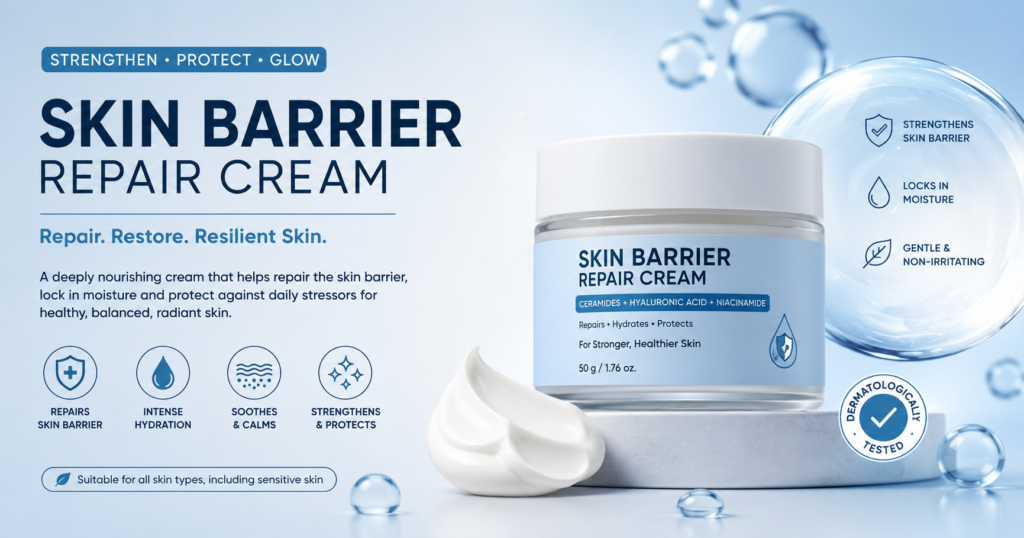
A skin barrier repair cream does much more than moisturize your skin. It strengthens your skin’s natural defenses, reduces moisture loss, calms irritation, and supports long-term skin health. If you’re dealing with a damaged skin barrier, persistent dryness, or visible enlarged pores, restoring your barrier should be your first priority rather than adding more active ingredients.
Look for formulas rich in ceramides, cholesterol, fatty acids, glycerin, panthenol, and hyaluronic acid, and give your skin several weeks of consistent use. As your barrier becomes healthier, you’ll likely notice smoother texture, better hydration, reduced sensitivity, and even large pores on face appearing less prominent thanks to improved skin elasticity and moisture balance.
No Responses