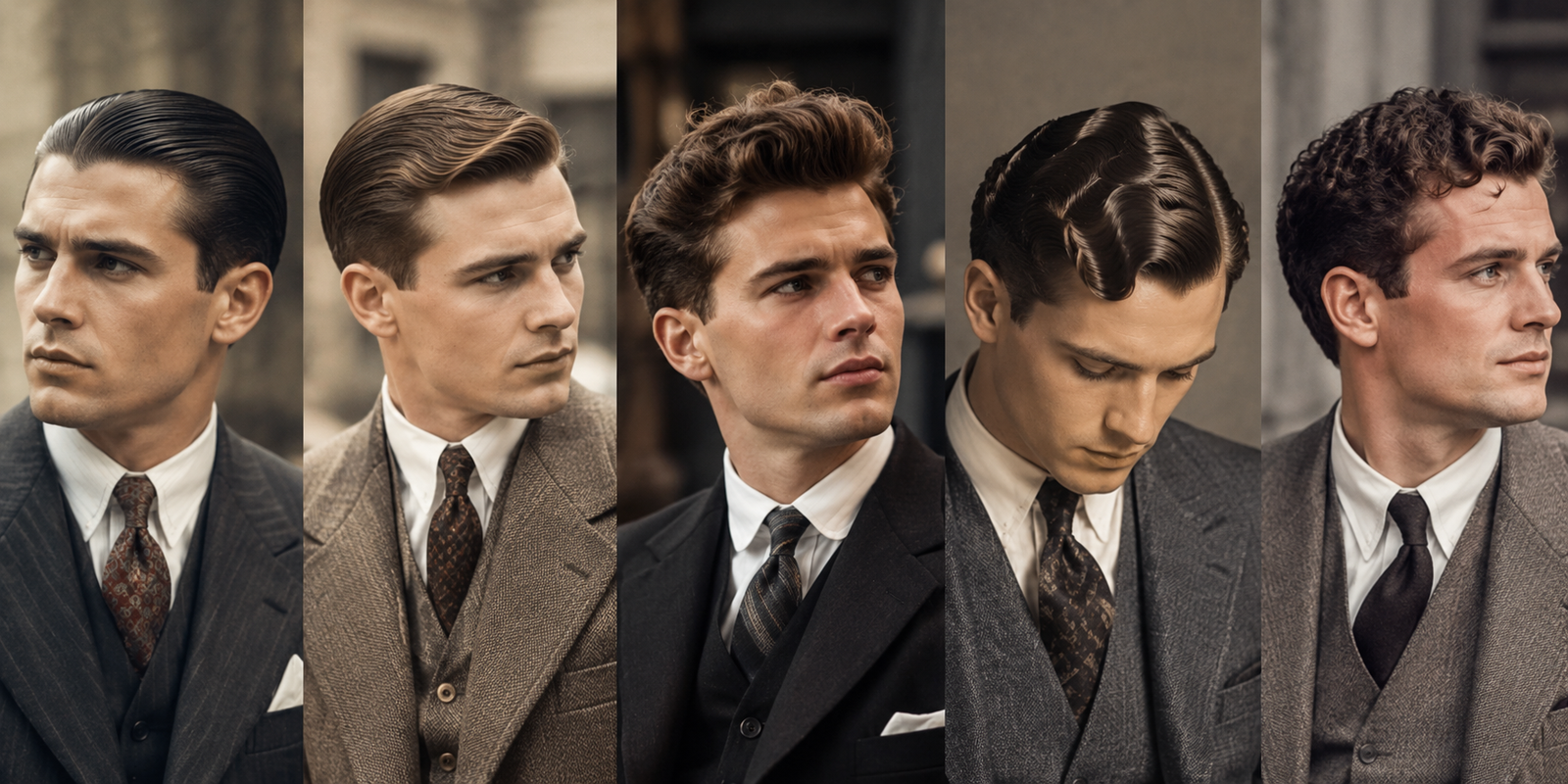
Mens hairstyles in the 1920s were known for their polished appearance, clean lines, and carefully styled finish. During this decade, men generally preferred neat and sophisticated haircuts that worked well with the formal fashion of the era. Slicked-back hair, side parts, short pompadours, wavy hairstyles, and neatly trimmed sides became popular choices.
The 1920s were an important period in men’s grooming history because hairstyles began to reflect changing attitudes toward fashion and personal appearance. Hair was usually kept controlled with brilliantine, hair oil, or pomade to create a smooth and shiny look. Hats were also an important part of men’s fashion, but the hairstyles underneath them were still carefully maintained.
Mens Hairstyles in the 1920s: What Did Men Actually Wear?
Mens hairstyles in the 1920s were generally medium-length on top with shorter sides and a clean neckline. Hair was often combed into a defined part and styled close to the head.
The most recognizable feature was the glossy finish. Men commonly used hair products to flatten the hair and keep individual strands in place. This created the classic “slick” appearance associated with 1920s men’s hair.
Popular characteristics included:
- Neatly combed and controlled hair
- Side parts and center parts
- Slicked-back hairstyles
- Shorter sides and back
- Medium-length hair on top
- Shiny, polished finishes
- Natural waves and curls
- Clean-shaven or neatly groomed facial hair
Popular 1920s Men’s Hairstyles
1. Slicked-Back Hair
Slicked-back hair was one of the most recognizable mens hairstyles in the 1920s. Men combed their hair backward using brilliantine or another styling product to create a smooth, glossy finish.
This hairstyle worked particularly well with formal suits, dress shirts, and traditional 1920s fashion. The sides were generally controlled close to the head while the top remained long enough to comb backward.
2. Classic Side Part
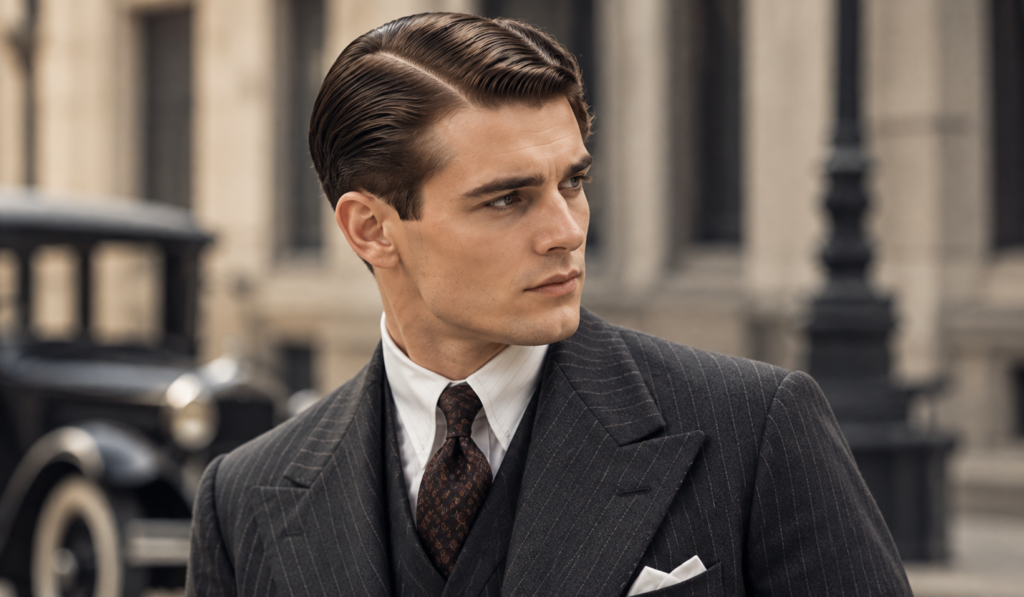
The side part was another popular choice during the decade. Hair was divided clearly on one side and combed neatly into place.
A deep side part could create a sophisticated appearance, while a softer part gave the hairstyle a more natural finish. This style remains one of the easiest vintage hairstyles to recreate today.
3. Short Pompadour
The short pompadour, sometimes described as a half-crown style, added a little height to the front and top of the hair. Unlike later pompadours, the 1920s version was generally more controlled and less dramatic.
The sides could be kept quite short, while the top was shaped upward and backward. This created a refined vintage appearance without excessive volume.
4. Wavy Hair
Natural waves were also fashionable among men during the 1920s. Instead of completely flattening their hair, some men allowed natural movement to remain visible.
Wavy 1920s hairstyles were usually styled with a side part and controlled using hair oil or brilliantine. The result was polished but still retained some natural texture.
5. Curly Hairstyles
Men with naturally curly hair could style their curls close to the head for a neat appearance. Hair products helped control frizz and create a more polished finish.
Curly hair was usually kept relatively short around the sides while the top retained enough length to show its natural texture.
6. Straight-Back Hairstyle
The straight-back style involved combing the hair directly away from the forehead. It was especially suitable for men who wanted a simple, formal hairstyle.
Hair oil or brilliantine helped keep the style flat and shiny throughout the day.
How Did Men Style Their Hair in the 1920s?
Hair products played an important role in creating mens hairstyles in the 1920s. Brilliantine was particularly popular because it helped smooth the hair and provided a noticeable shine.
A typical styling routine could include:
- Start with slightly damp hair.
- Apply a small amount of hair oil, brilliantine, or pomade.
- Create a side or center part.
- Comb the hair into the desired direction.
- Smooth the sides and back.
- Use a soft brush for a polished finish.
- Allow the hair to settle before putting on a hat.
The goal was usually a controlled and sophisticated hairstyle rather than a loose or messy appearance.
1920s Men’s Hair Products
Brilliantine was strongly associated with men’s grooming during the decade. Unlike modern strong-hold gels, brilliantine was primarily used to add shine and make hair easier to control.
Other grooming products and techniques included:
- Hair oils
- Pomades
- Brilliantine
- Petroleum-based products
- Natural oils
- Combs and soft brushes
These products helped create the shiny “wet-look” appearance that is often associated with vintage men’s hairstyles.
Haircuts and Grooming Trends of the 1920s
Mens hairstyles in the 1920s were part of a larger grooming trend. Men paid attention not only to their hair but also to shaving, mustaches, and overall presentation.
The sides were commonly shorter than the top, and the neckline was kept clean. Sideburns were generally shorter and higher compared with some earlier styles.
Facial hair was less dominant than it had been in previous generations. Clean-shaven faces became an important part of the modern 1920s appearance, although mustaches were still worn by some men.
Famous Men With 1920s Hairstyles
Several famous figures helped define the appearance of the decade. Actors and public personalities often appeared with carefully groomed, slick hairstyles.
Rudolph Valentino became particularly influential in men’s fashion and grooming. His polished appearance helped popularize romantic and sophisticated men’s styles.
Charlie Chaplin was another well-known figure of the period, although his distinctive character styling was different from the everyday hairstyles worn by most men.
Writers and public figures such as F. Scott Fitzgerald also represented the fashionable men’s appearance of the Jazz Age.
Why Were Hats So Important in the 1920s?
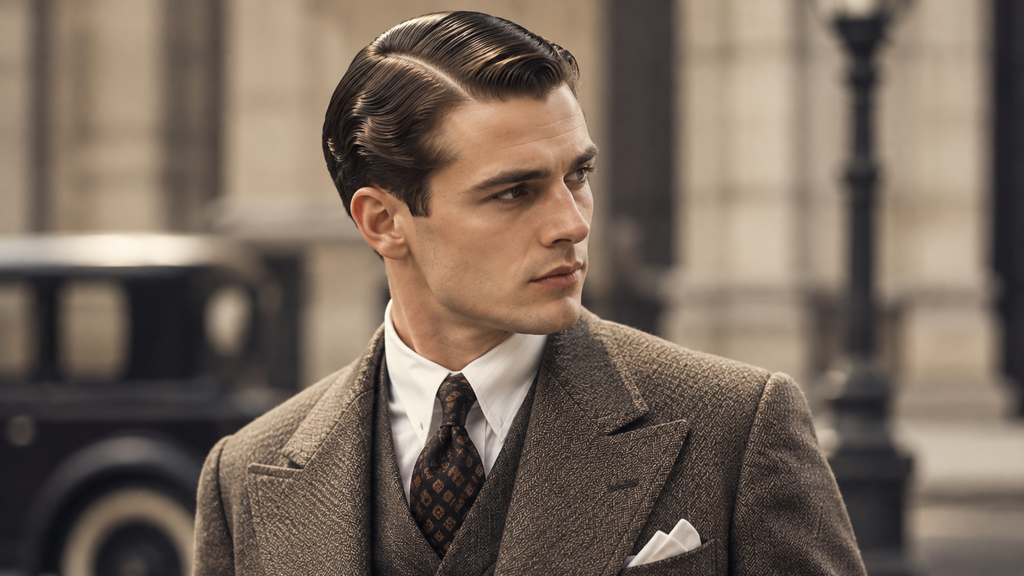
Hats were an essential part of men’s fashion during the 1920s. Fedora-style hats, flat caps, and other formal headwear were frequently worn with suits and everyday clothing.
Even though hats covered much of the hair, men still carefully styled their hairstyles underneath them. A hairstyle needed to remain relatively flat and controlled so it could work with traditional headwear.
This is one reason why slicked-back and neatly parted hairstyles became so practical and popular.
Mens Hairstyles in the 1920s vs. Modern Vintage Hairstyles
Modern versions of mens hairstyles in the 1920s often combine historical inspiration with contemporary haircutting techniques.
A modern barber may use a fade or taper on the sides, while the original 1920s styles generally relied on traditional scissor cuts and grooming methods.
For an authentic appearance, focus on:
- A defined side part
- Medium length on top
- Shorter sides
- Natural or controlled texture
- A glossy finish
- Classic combing patterns
- Minimal modern fading
This creates a vintage-inspired hairstyle without making it look overly theatrical.
How to Get a 1920s Men’s Hairstyle Today
If you want to recreate mens hairstyles in the 1920s, begin by growing enough length on top to create a defined part or slicked-back shape.
Ask your barber for shorter sides and back while keeping the top long enough to comb into place. Avoid making the fade too high if you want a more historically inspired appearance.
After the haircut, use a small amount of pomade or a shine-focused styling product. Comb the hair carefully and create a clean side part. Finish with a soft brush to remove harsh comb lines.
Best 1920s Men’s Hairstyles for Different Hair Types
Straight Hair
Straight hair is ideal for classic slicked-back and side-parted styles. It can be easily controlled with pomade or brilliantine.
Wavy Hair
Wavy hair can create an authentic vintage appearance because natural waves add texture to the hairstyle. Use a lightweight styling product to control the shape without completely removing the waves.
Curly Hair
Curly hair can be styled close to the head for a polished 1920s-inspired look. A suitable styling cream or pomade can help define the curls while controlling frizz.
Thick Hair
Men with thick hair may need a stronger styling product to keep the hairstyle controlled. A side part or slicked-back style can work particularly well.
Thin Hair
A short pompadour or carefully shaped side part can give thin hair a fuller appearance. Avoid using excessive product, as too much shine can make fine hair appear flatter.
LSI Keywords for Mens Hairstyles in the 1920s
For SEO, related keywords that naturally support the main topic include:
- 1920s men’s hairstyles
- men’s hairstyles from the 1920s
- 1920s men’s haircuts
- vintage men’s hairstyles
- classic men’s hairstyles
- 1920s slicked-back hair
- 1920s side part haircut
- 1920s pompadour
- vintage men’s hair
- Jazz Age hairstyles for men
- men’s hair in the Roaring Twenties
- 1920s grooming trends
- men’s hair products in the 1920s
- brilliantine hairstyle
- old-fashioned men’s hairstyles
- historical men’s hairstyles
Frequently Asked Questions
What were the most popular mens hairstyles in the 1920s?
The most popular mens hairstyles in the 1920s included slicked-back hair, side parts, straight-back styles, short pompadours, and neatly styled wavy or curly hair.
Did men in the 1920s use hair products?
Yes. Men commonly used products such as brilliantine and hair oils to control their hair and create the smooth, shiny appearance associated with the decade.
Was long hair popular for men in the 1920s?
Very long hair was not the typical men’s style. Most men wore controlled medium-length hair on top with shorter sides and a clean neckline.
What is a 1920s side part?
A 1920s side part is a neatly divided hairstyle in which the hair is separated to one side and combed into a smooth, controlled shape. It can be styled with pomade or brilliantine for an authentic vintage finish.
How can I make my hair look like a 1920s hairstyle?
Keep the sides shorter, leave enough length on top for styling, create a defined side part or slick the hair backward, and use a shine-focused styling product to achieve a classic vintage finish.
Were men clean-shaven in the 1920s?
Clean-shaven faces became increasingly popular during the 1920s. Some men still wore mustaches, but a clean and polished appearance was an important part of the decade’s grooming culture.
Conclusion
Mens hairstyles in the 1920s remain popular because they combine classic elegance with a timeless, polished appearance. Slicked-back hair, side parts, short pompadours, waves, and controlled curls were among the defining styles of the decade.
The key to recreating these vintage men’s hairstyles is to focus on neat proportions, controlled texture, a defined part, and a polished finish. Whether you want an authentic historical look or a modern interpretation, 1920s-inspired hair can still provide a sophisticated and distinctive style today.