Mens Hairstyles of the 20s: Classic 1920s Haircuts and Styles
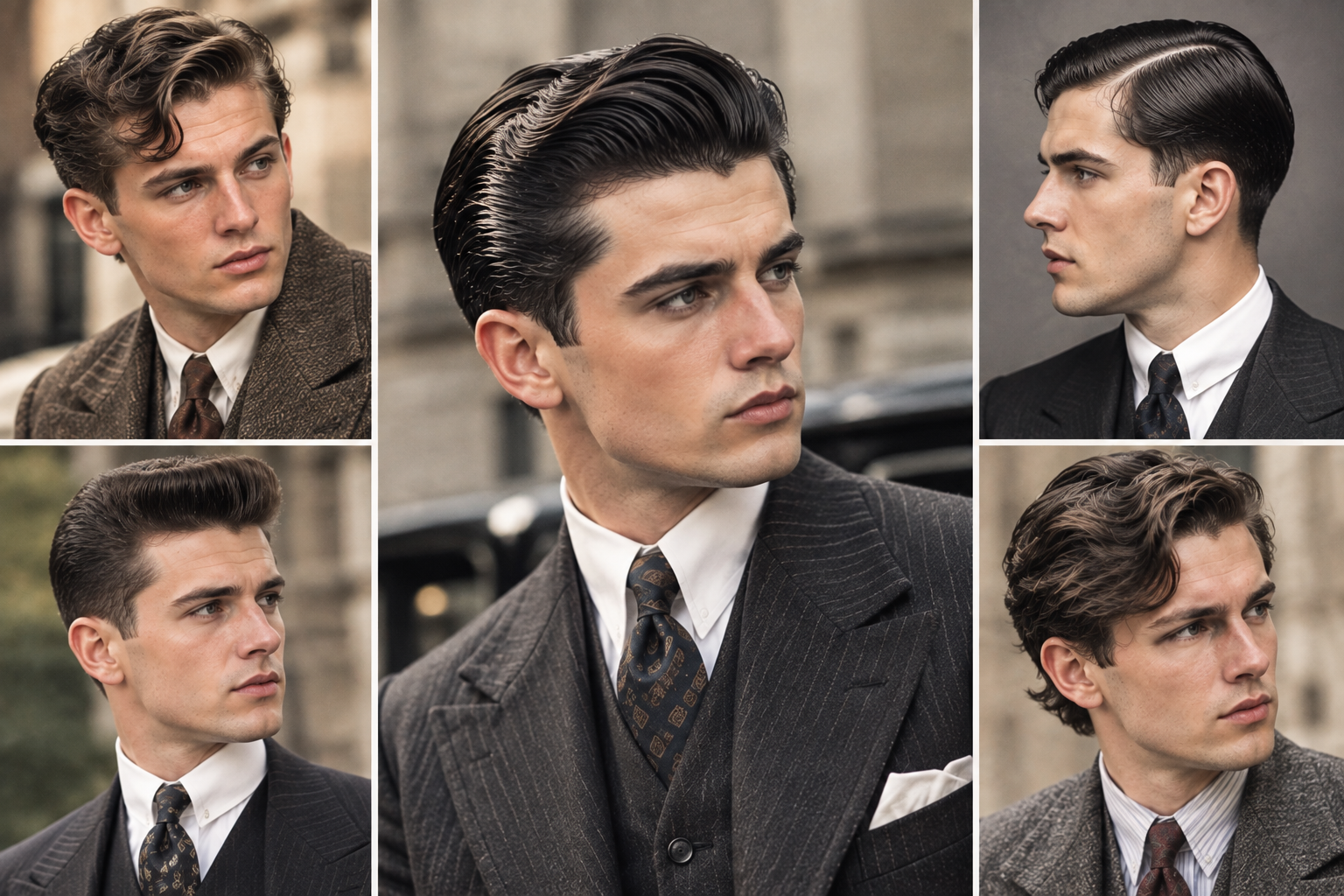
The mens hairstyles of the 20s were defined by polished finishes, neatly combed hair, strong side parts, and a sophisticated vintage appearance. The 1920s, often called the Roaring Twenties, was a decade of major cultural and fashion changes, and men’s grooming styles reflected that transformation.
During this era, men generally preferred hair that looked clean, controlled, and well-groomed. Slicked-back hairstyles, side parts, short pompadours, wavy hairstyles, and neatly trimmed cuts became popular. Hair products such as brilliantine and pomade helped create the glossy finish that is strongly associated with 1920s men’s hairstyles.
Today, these vintage men’s hairstyles continue to influence modern barbering and fashion. Whether you want a classic side part, a slicked-back look, or a retro pompadour, the mens hairstyles of the 20s offer plenty of inspiration.
Why Were Mens Hairstyles of the 20s So Popular?
The 1920s brought significant changes to men’s fashion and grooming. Men became increasingly interested in maintaining a neat and fashionable appearance. Hair was usually styled carefully rather than left naturally messy.
Several factors influenced men’s hairstyles during this decade:
- Neat grooming: Clean and controlled hair was considered stylish.
- Shiny finishes: Hair products created the characteristic glossy appearance.
- Formal fashion: Suits, hats, and polished shoes complemented carefully styled hair.
- Hollywood influence: Actors and entertainers helped popularize fashionable grooming trends.
- Barbering culture: Traditional barbershops played an important role in men’s grooming.
The result was a collection of sophisticated styles that still inspire modern vintage haircuts.
Key Features of Mens Hairstyles of the 20s
The mens hairstyles of the 20s shared several recognizable characteristics. While individual styles varied, many had a similar polished appearance.
Slick and Shiny Hair
Slick hair was one of the defining features of the decade. Men used oil-based products and brilliantine to flatten the hair and give it a glossy finish.
Strong Side Parts
A clearly defined side part was common. Hair was carefully combed from one side toward the other to create a structured appearance.
Shorter Sides
Many hairstyles featured shorter hair around the sides while leaving more length on top. This created a clean shape without removing too much hair.
Controlled Volume
Unlike many modern hairstyles that emphasize loose texture, 1920s hair was generally controlled and carefully arranged.
Clean Necklines
The neckline was typically kept neat, contributing to the polished appearance associated with vintage men’s grooming.
1. 1920s Slicked-Back Hairstyle
The slicked-back hairstyle is one of the most recognizable examples of mens hairstyles of the 20s.
Hair was generally kept longer on top and combed backward using a styling product. The finished style had a smooth and shiny appearance and worked particularly well with formal clothing.
To recreate this vintage hairstyle today, start with slightly damp hair and apply a small amount of pomade. Comb the hair backward and adjust the amount of product according to your hair thickness.
This style can work especially well for men with straight or slightly wavy hair.
2. Classic 1920s Side Part
The side part was another important 1920s men’s hairstyle. It offered a clean and sophisticated appearance and was suitable for both everyday grooming and formal occasions.
The hair was divided clearly on one side, with the longer section combed neatly across the head.
A modern version can be paired with a low taper or traditional scissor cut while maintaining the classic side-parted shape.
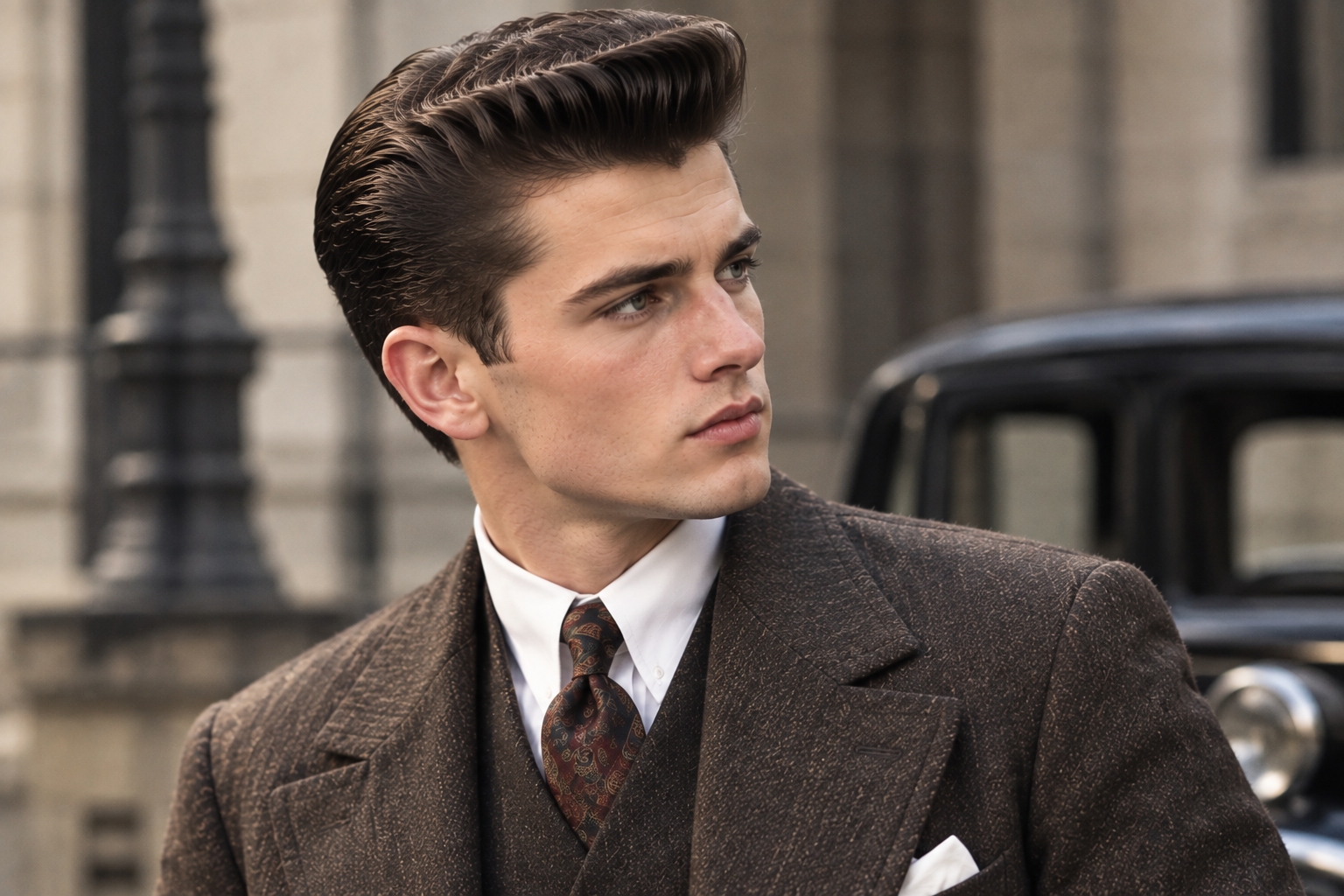
3. 1920s Short Pompadour
The short pompadour was another variation seen during the era. Compared with today’s dramatic pompadours, the 1920s version was generally more restrained.
The hair on top had some height while the sides were kept relatively short. Styling products helped maintain the shape and provided a polished finish.
For a modern interpretation, you can add a little more texture while keeping the overall vintage silhouette.
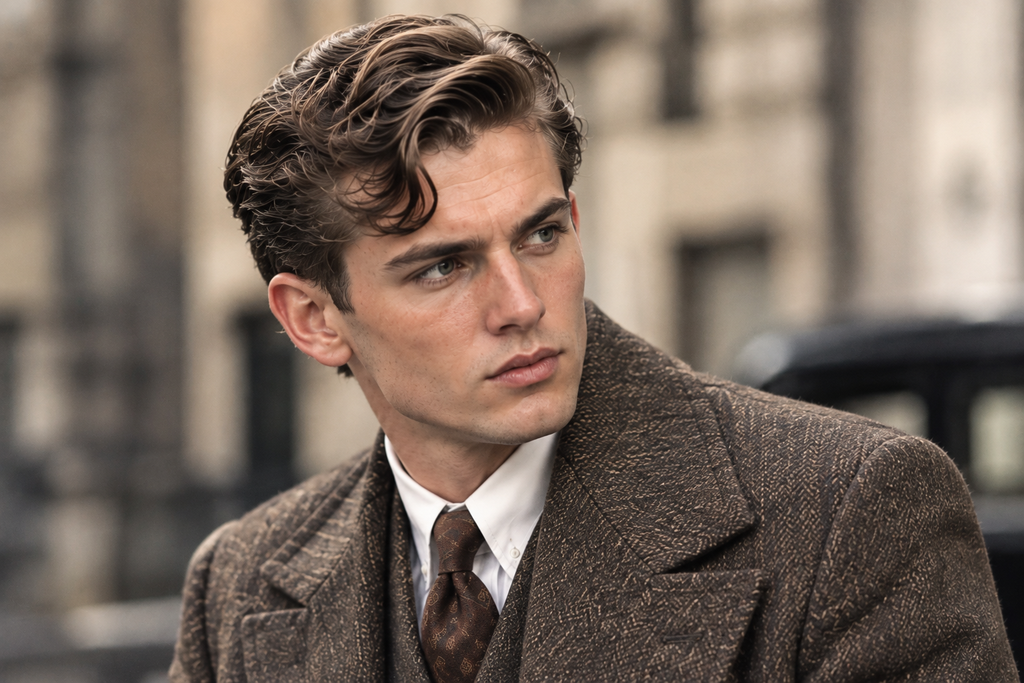
4. 1920s Wavy Hairstyle
Men with naturally wavy hair could create elegant hairstyles without completely eliminating their natural texture.
Waves were often controlled with styling products and combing. The result was a smooth, sophisticated hairstyle with visible movement.
If you have naturally wavy hair, avoid using excessive product. A lightweight styling cream or pomade can help control the waves while preserving some natural texture.
5. 1920s Curly Hairstyle
Curly-haired men also had options during the 1920s. Rather than creating extremely defined modern curls, the hair could be shaped and controlled to create a neat overall appearance.
The sides could be trimmed shorter while the curls on top were kept slightly longer. This provided a balanced vintage appearance.
Today, a barber can adapt this style to your natural curl pattern while maintaining the classic 1920s inspiration.
6. 1920s Comb-Over Style
The comb-over was another variation of the carefully groomed hairstyles of the period.
Hair was combed from a defined part toward the opposite side. Depending on hair length and density, the style could look either very structured or relatively soft.
For a contemporary version, ask your barber for a classic side part with enough length on top to comb across naturally.
7. Short Sides and Longer Top
Many mens hairstyles of the 20s created contrast by keeping the sides shorter while leaving additional length on top.
This basic structure remains popular today because it can be adapted to different face shapes and hair types.
A modern barber may combine the vintage shape with a subtle taper, allowing you to achieve a historical-inspired style without making the haircut look outdated.
How to Style Mens Hairstyles of the 20s
Recreating a 1920s-inspired hairstyle does not require complicated equipment. The most important elements are the haircut, styling product, and combing technique.
Step 1: Start With Clean Hair
Wash your hair and towel-dry it. The hair should be slightly damp rather than completely soaking wet.
Step 2: Create Your Part
Use a comb to create a defined side part. Choose the side that naturally suits your hair growth and preferred appearance.
Step 3: Apply Styling Product
Apply a small amount of pomade or another suitable styling product. Start with less and add more if necessary.
Step 4: Comb the Hair Into Shape
For a slicked-back style, comb the hair toward the back. For a side part, comb the longer section across and backward.
Step 5: Smooth the Finish
Use a fine-tooth comb for a sharper vintage appearance or a softer brush for a more natural finish.
Step 6: Make Final Adjustments
Check the sides, part, and neckline. The goal is a controlled hairstyle that looks polished without becoming excessively stiff.
Best Hair Products for a 1920s-Inspired Look
Choosing the right product can make a significant difference when recreating vintage hairstyles.
Pomade
Pomade is useful for creating shine, control, and definition. It works particularly well for slicked-back styles and side parts.
Hair Gel
Gel can provide strong hold, although it may create a more modern finish depending on the product.
Styling Cream
A styling cream is useful if you want a softer appearance, particularly for wavy or textured hair.
Hair Oil
A small amount of hair oil can add shine, but too much can make the hair appear greasy rather than intentionally polished.
How to Choose a 1920s Hairstyle for Your Hair Type
Different hair types require different approaches.
Straight Hair
Straight hair is naturally suited to slicked-back hairstyles, side parts, and classic comb-overs.
Wavy Hair
Wavy hair can create an attractive vintage texture. Use a moderate amount of product to control the waves without completely flattening them.
Curly Hair
Curly hair can be shaped into a shorter vintage-inspired cut while allowing the natural curl pattern to remain visible.
Thick Hair
Men with thick hair may need stronger styling products and a carefully shaped haircut to keep the hairstyle controlled.
Fine Hair
A lightweight styling product can help fine hair maintain shape without weighing it down.
Mens Hairstyles of the 20s and Men’s Fashion
Hair was only one part of the overall 1920s men’s appearance. Hairstyles were commonly paired with suits, dress shirts, ties, waistcoats, and hats.
A polished hairstyle complemented the structured clothing of the period. Hats were particularly common, meaning many men needed hairstyles that could still look presentable after wearing headwear.
For a complete vintage-inspired appearance, combine a classic haircut with appropriate clothing and grooming details.
Why 1920s Men’s Hairstyles Still Influence Modern Haircuts
Vintage hairstyles regularly return to modern fashion because their basic shapes are versatile.
The side part, slicked-back style, pompadour, and tapered sides can all be adapted for contemporary men’s grooming.
Modern barbers may combine these traditional elements with:
- Low taper
- Classic taper
- Textured top
- Modern fade
- Natural finish
- Beard styling
- Longer fringe
This allows you to create a hairstyle inspired by the mens hairstyles of the 20s without copying the historical style exactly.
Tips for Getting a Modern 1920s Haircut
If you want a vintage-inspired haircut, communication with your barber is important.
Tell your barber:
- You want a 1920s-inspired men’s hairstyle.
- You prefer a defined side part or slicked-back shape.
- You want enough length on top for styling.
- You want the sides neat but not necessarily extremely faded.
- You want a polished vintage finish.
Bringing a reference photograph can also make it easier for your barber to understand the exact shape you want.
Frequently Asked Questions
What were the most popular mens hairstyles of the 20s?
Popular styles included slicked-back hair, side parts, comb-overs, short pompadours, and controlled wavy or curly hairstyles.
How did men style their hair in the 1920s?
Men commonly used products such as brilliantine and other hair oils or styling products to create smooth, controlled, and sometimes shiny hairstyles.
Did men have long hair in the 1920s?
Most fashionable men’s hairstyles were relatively controlled, with shorter sides and more length on top. Some styles used several inches of length on top for slicking or combing.
What is a 1920s men’s haircut called?
There was not one single haircut name for the decade. Common descriptions include the side part, slicked-back hairstyle, short pompadour, comb-over, and other neatly groomed vintage cuts.
Is a 1920s hairstyle still fashionable today?
Yes. Modern versions of side parts, pompadours, slicked-back hairstyles, and tapered cuts continue to be used in contemporary men’s grooming.
What product should I use for a 1920s hairstyle?
Pomade is a popular choice for creating a polished vintage appearance. Styling cream can be preferable if you want a softer and more natural finish.
Can men with curly hair wear a 1920s hairstyle?
Yes. Curly hair can be shaped into a vintage-inspired style by keeping the haircut neat while allowing some natural curl and texture to remain.
How do I ask my barber for a 1920s hairstyle?
Ask for a vintage-inspired side part, slick-back, or pompadour and explain how much length you want on top. A reference image can help your barber understand the desired shape.
image can help your barber understand the desired shape.
Conclusion
The mens hairstyles of the 20s remain an important source of inspiration for classic men’s grooming. From slicked-back hair and defined side parts to short pompadours and controlled waves, the hairstyles of the 1920s focused on neatness, structure, and polished presentation.
Modern men can adapt these vintage styles by combining traditional shapes with contemporary cuts such as subtle tapers, textured tops, or modern fades. Whether you are looking for a formal hairstyle or an everyday vintage-inspired look, 1920s men’s hair provides plenty of timeless ideas.Mens Hairstyles of the 20s: Classic 1920s Haircuts and Styles
The mens hairstyles of the 20s were defined by polished finishes, neatly combed hair, strong side parts, and a sophisticated vintage appearance. The 1920s, often called the Roaring Twenties, was a decade of major cultural and fashion changes, and men’s grooming styles reflected that transformation.
During this era, men generally preferred hair that looked clean, controlled, and well-groomed. Slicked-back hairstyles, side parts, short pompadours, wavy hairstyles, and neatly trimmed cuts became popular. Hair products such as brilliantine and pomade helped create the glossy finish that is strongly associated with 1920s men’s hairstyles.
Today, these vintage men’s hairstyles continue to influence modern barbering and fashion. Whether you want a classic side part, a slicked-back look, or a retro pompadour, the mens hairstyles of the 20s offer plenty of inspiration.
Why Were Mens Hairstyles of the 20s So Popular?
The 1920s brought significant changes to men’s fashion and grooming. Men became increasingly interested in maintaining a neat and fashionable appearance. Hair was usually styled carefully rather than left naturally messy.
Several factors influenced men’s hairstyles during this decade:
- Neat grooming: Clean and controlled hair was considered stylish.
- Shiny finishes: Hair products created the characteristic glossy appearance.
- Formal fashion: Suits, hats, and polished shoes complemented carefully styled hair.
- Hollywood influence: Actors and entertainers helped popularize fashionable grooming trends.
- Barbering culture: Traditional barbershops played an important role in men’s grooming.
The result was a collection of sophisticated styles that still inspire modern vintage haircuts.
Key Features of Mens Hairstyles of the 20s
The mens hairstyles of the 20s shared several recognizable characteristics. While individual styles varied, many had a similar polished appearance.
Slick and Shiny Hair
Slick hair was one of the defining features of the decade. Men used oil-based products and brilliantine to flatten the hair and give it a glossy finish.
Strong Side Parts
A clearly defined side part was common. Hair was carefully combed from one side toward the other to create a structured appearance.
Shorter Sides
Many hairstyles featured shorter hair around the sides while leaving more length on top. This created a clean shape without removing too much hair.
Controlled Volume
Unlike many modern hairstyles that emphasize loose texture, 1920s hair was generally controlled and carefully arranged.
Clean Necklines
The neckline was typically kept neat, contributing to the polished appearance associated with vintage men’s grooming.
1. 1920s Slicked-Back Hairstyle
The slicked-back hairstyle is one of the most recognizable examples of mens hairstyles of the 20s.
Hair was generally kept longer on top and combed backward using a styling product. The finished style had a smooth and shiny appearance and worked particularly well with formal clothing.
To recreate this vintage hairstyle today, start with slightly damp hair and apply a small amount of pomade. Comb the hair backward and adjust the amount of product according to your hair thickness.
This style can work especially well for men with straight or slightly wavy hair.
2. Classic 1920s Side Part
The side part was another important 1920s men’s hairstyle. It offered a clean and sophisticated appearance and was suitable for both everyday grooming and formal occasions.
The hair was divided clearly on one side, with the longer section combed neatly across the head.
A modern version can be paired with a low taper or traditional scissor cut while maintaining the classic side-parted shape.
3. 1920s Short Pompadour
The short pompadour was another variation seen during the era. Compared with today’s dramatic pompadours, the 1920s version was generally more restrained.
The hair on top had some height while the sides were kept relatively short. Styling products helped maintain the shape and provided a polished finish.
For a modern interpretation, you can add a little more texture while keeping the overall vintage silhouette.
4. 1920s Wavy Hairstyle
Men with naturally wavy hair could create elegant hairstyles without completely eliminating their natural texture.
Waves were often controlled with styling products and combing. The result was a smooth, sophisticated hairstyle with visible movement.
If you have naturally wavy hair, avoid using excessive product. A lightweight styling cream or pomade can help control the waves while preserving some natural texture.
5. 1920s Curly Hairstyle
Curly-haired men also had options during the 1920s. Rather than creating extremely defined modern curls, the hair could be shaped and controlled to create a neat overall appearance.
The sides could be trimmed shorter while the curls on top were kept slightly longer. This provided a balanced vintage appearance.
Today, a barber can adapt this style to your natural curl pattern while maintaining the classic 1920s inspiration.
6. 1920s Comb-Over Style
The comb-over was another variation of the carefully groomed hairstyles of the period.
Hair was combed from a defined part toward the opposite side. Depending on hair length and density, the style could look either very structured or relatively soft.
For a contemporary version, ask your barber for a classic side part with enough length on top to comb across naturally.
7. Short Sides and Longer Top
Many mens hairstyles of the 20s created contrast by keeping the sides shorter while leaving additional length on top.
This basic structure remains popular today because it can be adapted to different face shapes and hair types.
A modern barber may combine the vintage shape with a subtle taper, allowing you to achieve a historical-inspired style without making the haircut look outdated.
How to Style Mens Hairstyles of the 20s
Recreating a 1920s-inspired hairstyle does not require complicated equipment. The most important elements are the haircut, styling product, and combing technique.
Step 1: Start With Clean Hair
Wash your hair and towel-dry it. The hair should be slightly damp rather than completely soaking wet.
Step 2: Create Your Part
Use a comb to create a defined side part. Choose the side that naturally suits your hair growth and preferred appearance.
Step 3: Apply Styling Product
Apply a small amount of pomade or another suitable styling product. Start with less and add more if necessary.
Step 4: Comb the Hair Into Shape
For a slicked-back style, comb the hair toward the back. For a side part, comb the longer section across and backward.
Step 5: Smooth the Finish
Use a fine-tooth comb for a sharper vintage appearance or a softer brush for a more natural finish.
Step 6: Make Final Adjustments
Check the sides, part, and neckline. The goal is a controlled hairstyle that looks polished without becoming excessively stiff.
Best Hair Products for a 1920s-Inspired Look
Choosing the right product can make a significant difference when recreating vintage hairstyles.
Pomade
Pomade is useful for creating shine, control, and definition. It works particularly well for slicked-back styles and side parts.
Hair Gel
Gel can provide strong hold, although it may create a more modern finish depending on the product.
Styling Cream
A styling cream is useful if you want a softer appearance, particularly for wavy or textured hair.
Hair Oil
A small amount of hair oil can add shine, but too much can make the hair appear greasy rather than intentionally polished.
How to Choose a 1920s Hairstyle for Your Hair Type
Different hair types require different approaches.
Straight Hair
Straight hair is naturally suited to slicked-back hairstyles, side parts, and classic comb-overs.
Wavy Hair
Wavy hair can create an attractive vintage texture. Use a moderate amount of product to control the waves without completely flattening them.
Curly Hair
Curly hair can be shaped into a shorter vintage-inspired cut while allowing the natural curl pattern to remain visible.
Thick Hair
Men with thick hair may need stronger styling products and a carefully shaped haircut to keep the hairstyle controlled.
Fine Hair
A lightweight styling product can help fine hair maintain shape without weighing it down.
Mens Hairstyles of the 20s and Men’s Fashion
Hair was only one part of the overall 1920s men’s appearance. Hairstyles were commonly paired with suits, dress shirts, ties, waistcoats, and hats.
A polished hairstyle complemented the structured clothing of the period. Hats were particularly common, meaning many men needed hairstyles that could still look presentable after wearing headwear.
For a complete vintage-inspired appearance, combine a classic haircut with appropriate clothing and grooming details.
Why 1920s Men’s Hairstyles Still Influence Modern Haircuts
Vintage hairstyles regularly return to modern fashion because their basic shapes are versatile.
The side part, slicked-back style, pompadour, and tapered sides can all be adapted for contemporary men’s grooming.
Modern barbers may combine these traditional elements with:
- Low taper
- Classic taper
- Textured top
- Modern fade
- Natural finish
- Beard styling
- Longer fringe
This allows you to create a hairstyle inspired by the mens hairstyles of the 20s without copying the historical style exactly.
Tips for Getting a Modern 1920s Haircut
If you want a vintage-inspired haircut, communication with your barber is important.
Tell your barber:
- You want a 1920s-inspired men’s hairstyle.
- You prefer a defined side part or slicked-back shape.
- You want enough length on top for styling.
- You want the sides neat but not necessarily extremely faded.
- You want a polished vintage finish.
Bringing a reference photograph can also make it easier for your barber to understand the exact shape you want.
Frequently Asked Questions
What were the most popular mens hairstyles of the 20s?
Popular styles included slicked-back hair, side parts, comb-overs, short pompadours, and controlled wavy or curly hairstyles.
How did men style their hair in the 1920s?
Men commonly used products such as brilliantine and other hair oils or styling products to create smooth, controlled, and sometimes shiny hairstyles.
Did men have long hair in the 1920s?
Most fashionable men’s hairstyles were relatively controlled, with shorter sides and more length on top. Some styles used several inches of length on top for slicking or combing.
What is a 1920s men’s haircut called?
There was not one single haircut name for the decade. Common descriptions include the side part, slicked-back hairstyle, short pompadour, comb-over, and other neatly groomed vintage cuts.
Is a 1920s hairstyle still fashionable today?
Yes. Modern versions of side parts, pompadours, slicked-back hairstyles, and tapered cuts continue to be used in contemporary men’s grooming.
What product should I use for a 1920s hairstyle?
Pomade is a popular choice for creating a polished vintage appearance. Styling cream can be preferable if you want a softer and more natural finish.
Can men with curly hair wear a 1920s hairstyle?
Yes. Curly hair can be shaped into a vintage-inspired style by keeping the haircut neat while allowing some natural curl and texture to remain.
How do I ask my barber for a 1920s hairstyle?
Ask for a vintage-inspired side part, slick-back, or pompadour and explain how much length you want on top. A reference image can help your barber understand the desired shape.
Conclusion
The mens hairstyles of the 20s remain an important source of inspiration for classic men’s grooming. From slicked-back hair and defined side parts to short pompadours and controlled waves, the hairstyles of the 1920s focused on neatness, structure, and polished presentation.
Modern men can adapt these vintage styles by combining traditional shapes with contemporary cuts such as subtle tapers, textured tops, or modern fades. Whether you are looking for a formal hairstyle or an everyday vintage-inspired look, 1920s men’s hair provides plenty of timeless ideas.Mens Hairstyles of the 20s: Classic 1920s Haircuts and Styles
The mens hairstyles of the 20s were defined by polished finishes, neatly combed hair, strong side parts, and a sophisticated vintage appearance. The 1920s, often called the Roaring Twenties, was a decade of major cultural and fashion changes, and men’s grooming styles reflected that transformation.
During this era, men generally preferred hair that looked clean, controlled, and well-groomed. Slicked-back hairstyles, side parts, short pompadours, wavy hairstyles, and neatly trimmed cuts became popular. Hair products such as brilliantine and pomade helped create the glossy finish that is strongly associated with 1920s men’s hairstyles.
Today, these vintage men’s hairstyles continue to influence modern barbering and fashion. Whether you want a classic side part, a slicked-back look, or a retro pompadour, the mens hairstyles of the 20s offer plenty of inspiration.
Why Were Mens Hairstyles of the 20s So Popular?
The 1920s brought significant changes to men’s fashion and grooming. Men became increasingly interested in maintaining a neat and fashionable appearance. Hair was usually styled carefully rather than left naturally messy.
Several factors influenced men’s hairstyles during this decade:
- Neat grooming: Clean and controlled hair was considered stylish.
- Shiny finishes: Hair products created the characteristic glossy appearance.
- Formal fashion: Suits, hats, and polished shoes complemented carefully styled hair.
- Hollywood influence: Actors and entertainers helped popularize fashionable grooming trends.
- Barbering culture: Traditional barbershops played an important role in men’s grooming.
The result was a collection of sophisticated styles that still inspire modern vintage haircuts.
Key Features of Mens Hairstyles of the 20s
The mens hairstyles of the 20s shared several recognizable characteristics. While individual styles varied, many had a similar polished appearance.
Slick and Shiny Hair
Slick hair was one of the defining features of the decade. Men used oil-based products and brilliantine to flatten the hair and give it a glossy finish.
Strong Side Parts
A clearly defined side part was common. Hair was carefully combed from one side toward the other to create a structured appearance.
Shorter Sides
Many hairstyles featured shorter hair around the sides while leaving more length on top. This created a clean shape without removing too much hair.
Controlled Volume
Unlike many modern hairstyles that emphasize loose texture, 1920s hair was generally controlled and carefully arranged.
Clean Necklines
The neckline was typically kept neat, contributing to the polished appearance associated with vintage men’s grooming.
1. 1920s Slicked-Back Hairstyle
The slicked-back hairstyle is one of the most recognizable examples of mens hairstyles of the 20s.
Hair was generally kept longer on top and combed backward using a styling product. The finished style had a smooth and shiny appearance and worked particularly well with formal clothing.
To recreate this vintage hairstyle today, start with slightly damp hair and apply a small amount of pomade. Comb the hair backward and adjust the amount of product according to your hair thickness.
This style can work especially well for men with straight or slightly wavy hair.
2. Classic 1920s Side Part
The side part was another important 1920s men’s hairstyle. It offered a clean and sophisticated appearance and was suitable for both everyday grooming and formal occasions.
The hair was divided clearly on one side, with the longer section combed neatly across the head.
A modern version can be paired with a low taper or traditional scissor cut while maintaining the classic side-parted shape.
3. 1920s Short Pompadour
The short pompadour was another variation seen during the era. Compared with today’s dramatic pompadours, the 1920s version was generally more restrained.
The hair on top had some height while the sides were kept relatively short. Styling products helped maintain the shape and provided a polished finish.
For a modern interpretation, you can add a little more texture while keeping the overall vintage silhouette.
4. 1920s Wavy Hairstyle
Men with naturally wavy hair could create elegant hairstyles without completely eliminating their natural texture.
Waves were often controlled with styling products and combing. The result was a smooth, sophisticated hairstyle with visible movement.
If you have naturally wavy hair, avoid using excessive product. A lightweight styling cream or pomade can help control the waves while preserving some natural texture.
5. 1920s Curly Hairstyle
Curly-haired men also had options during the 1920s. Rather than creating extremely defined modern curls, the hair could be shaped and controlled to create a neat overall appearance.
The sides could be trimmed shorter while the curls on top were kept slightly longer. This provided a balanced vintage appearance.
Today, a barber can adapt this style to your natural curl pattern while maintaining the classic 1920s inspiration.
6. 1920s Comb-Over Style
The comb-over was another variation of the carefully groomed hairstyles of the period.
Hair was combed from a defined part toward the opposite side. Depending on hair length and density, the style could look either very structured or relatively soft.
For a contemporary version, ask your barber for a classic side part with enough length on top to comb across naturally.
7. Short Sides and Longer Top
Many mens hairstyles of the 20s created contrast by keeping the sides shorter while leaving additional length on top.
This basic structure remains popular today because it can be adapted to different face shapes and hair types.
A modern barber may combine the vintage shape with a subtle taper, allowing you to achieve a historical-inspired style without making the haircut look outdated.
How to Style Mens Hairstyles of the 20s
Recreating a 1920s-inspired hairstyle does not require complicated equipment. The most important elements are the haircut, styling product, and combing technique.
Step 1: Start With Clean Hair
Wash your hair and towel-dry it. The hair should be slightly damp rather than completely soaking wet.
Step 2: Create Your Part
Use a comb to create a defined side part. Choose the side that naturally suits your hair growth and preferred appearance.
Step 3: Apply Styling Product
Apply a small amount of pomade or another suitable styling product. Start with less and add more if necessary.
Step 4: Comb the Hair Into Shape
For a slicked-back style, comb the hair toward the back. For a side part, comb the longer section across and backward.
Step 5: Smooth the Finish
Use a fine-tooth comb for a sharper vintage appearance or a softer brush for a more natural finish.
Step 6: Make Final Adjustments
Check the sides, part, and neckline. The goal is a controlled hairstyle that looks polished without becoming excessively stiff.
Best Hair Products for a 1920s-Inspired Look
Choosing the right product can make a significant difference when recreating vintage hairstyles.
Pomade
Pomade is useful for creating shine, control, and definition. It works particularly well for slicked-back styles and side parts.
Hair Gel
Gel can provide strong hold, although it may create a more modern finish depending on the product.
Styling Cream
A styling cream is useful if you want a softer appearance, particularly for wavy or textured hair.
Hair Oil
A small amount of hair oil can add shine, but too much can make the hair appear greasy rather than intentionally polished.
How to Choose a 1920s Hairstyle for Your Hair Type
Different hair types require different approaches.
Straight Hair
Straight hair is naturally suited to slicked-back hairstyles, side parts, and classic comb-overs.
Wavy Hair
Wavy hair can create an attractive vintage texture. Use a moderate amount of product to control the waves without completely flattening them.
Curly Hair
Curly hair can be shaped into a shorter vintage-inspired cut while allowing the natural curl pattern to remain visible.
Thick Hair
Men with thick hair may need stronger styling products and a carefully shaped haircut to keep the hairstyle controlled.
Fine Hair
A lightweight styling product can help fine hair maintain shape without weighing it down.
Mens Hairstyles of the 20s and Men’s Fashion
Hair was only one part of the overall 1920s men’s appearance. Hairstyles were commonly paired with suits, dress shirts, ties, waistcoats, and hats.
A polished hairstyle complemented the structured clothing of the period. Hats were particularly common, meaning many men needed hairstyles that could still look presentable after wearing headwear.
For a complete vintage-inspired appearance, combine a classic haircut with appropriate clothing and grooming details.
Why 1920s Men’s Hairstyles Still Influence Modern Haircuts
Vintage hairstyles regularly return to modern fashion because their basic shapes are versatile.
The side part, slicked-back style, pompadour, and tapered sides can all be adapted for contemporary men’s grooming.
Modern barbers may combine these traditional elements with:
- Low taper
- Classic taper
- Textured top
- Modern fade
- Natural finish
- Beard styling
- Longer fringe
This allows you to create a hairstyle inspired by the mens hairstyles of the 20s without copying the historical style exactly.
Tips for Getting a Modern 1920s Haircut
If you want a vintage-inspired haircut, communication with your barber is important.
Tell your barber:
- You want a 1920s-inspired men’s hairstyle.
- You prefer a defined side part or slicked-back shape.
- You want enough length on top for styling.
- You want the sides neat but not necessarily extremely faded.
- You want a polished vintage finish.
Bringing a reference photograph can also make it easier for your barber to understand the exact shape you want.
Frequently Asked Questions
What were the most popular mens hairstyles of the 20s?
Popular styles included slicked-back hair, side parts, comb-overs, short pompadours, and controlled wavy or curly hairstyles.
How did men style their hair in the 1920s?
Men commonly used products such as brilliantine and other hair oils or styling products to create smooth, controlled, and sometimes shiny hairstyles.
Did men have long hair in the 1920s?
Most fashionable men’s hairstyles were relatively controlled, with shorter sides and more length on top. Some styles used several inches of length on top for slicking or combing.
What is a 1920s men’s haircut called?
There was not one single haircut name for the decade. Common descriptions include the side part, slicked-back hairstyle, short pompadour, comb-over, and other neatly groomed vintage cuts.
Is a 1920s hairstyle still fashionable today?
Yes. Modern versions of side parts, pompadours, slicked-back hairstyles, and tapered cuts continue to be used in contemporary men’s grooming.
What product should I use for a 1920s hairstyle?
Pomade is a popular choice for creating a polished vintage appearance. Styling cream can be preferable if you want a softer and more natural finish.
Can men with curly hair wear a 1920s hairstyle?
Yes. Curly hair can be shaped into a vintage-inspired style by keeping the haircut neat while allowing some natural curl and texture to remain.
How do I ask my barber for a 1920s hairstyle?
Ask for a vintage-inspired side part, slick-back, or pompadour and explain how much length you want on top. A reference image can help your barber understand the desired shape.
Conclusion
The mens hairstyles of the 20s remain an important source of inspiration for classic men’s grooming. From slicked-back hair and defined side parts to short pompadours and controlled waves, the hairstyles of the 1920s focused on neatness, structure, and polished presentation.
Modern men can adapt these vintage styles by combining traditional shapes with contemporary cuts such as subtle tapers, textured tops, or modern fades. Whether you are looking for a formal hairstyle or an everyday vintage-inspired look, 1920s men’s hair provides plenty of timeless ideas.vvMens Hairstyles of the 20s: Classic 1920s Haircuts and Styles
The mens hairstyles of the 20s were defined by polished finishes, neatly combed hair, strong side parts, and a sophisticated vintage appearance. The 1920s, often called the Roaring Twenties, was a decade of major cultural and fashion changes, and men’s grooming styles reflected that transformation.
During this era, men generally preferred hair that looked clean, controlled, and well-groomed. Slicked-back hairstyles, side parts, short pompadours, wavy hairstyles, and neatly trimmed cuts became popular. Hair products such as brilliantine and pomade helped create the glossy finish that is strongly associated with 1920s men’s hairstyles.
Today, these vintage men’s hairstyles continue to influence modern barbering and fashion. Whether you want a classic side part, a slicked-back look, or a retro pompadour, the mens hairstyles of the 20s offer plenty of inspiration.
Why Were Mens Hairstyles of the 20s So Popular?
The 1920s brought significant changes to men’s fashion and grooming. Men became increasingly interested in maintaining a neat and fashionable appearance. Hair was usually styled carefully rather than left naturally messy.
Several factors influenced men’s hairstyles during this decade:
- Neat grooming: Clean and controlled hair was considered stylish.
- Shiny finishes: Hair products created the characteristic glossy appearance.
- Formal fashion: Suits, hats, and polished shoes complemented carefully styled hair.
- Hollywood influence: Actors and entertainers helped popularize fashionable grooming trends.
- Barbering culture: Traditional barbershops played an important role in men’s grooming.
The result was a collection of sophisticated styles that still inspire modern vintage haircuts.
Key Features of Mens Hairstyles of the 20s
The mens hairstyles of the 20s shared several recognizable characteristics. While individual styles varied, many had a similar polished appearance.
Slick and Shiny Hair
Slick hair was one of the defining features of the decade. Men used oil-based products and brilliantine to flatten the hair and give it a glossy finish.
Strong Side Parts
A clearly defined side part was common. Hair was carefully combed from one side toward the other to create a structured appearance.
Shorter Sides
Many hairstyles featured shorter hair around the sides while leaving more length on top. This created a clean shape without removing too much hair.
Controlled Volume
Unlike many modern hairstyles that emphasize loose texture, 1920s hair was generally controlled and carefully arranged.
Clean Necklines
The neckline was typically kept neat, contributing to the polished appearance associated with vintage men’s grooming.
1. 1920s Slicked-Back Hairstyle
The slicked-back hairstyle is one of the most recognizable examples of mens hairstyles of the 20s.
Hair was generally kept longer on top and combed backward using a styling product. The finished style had a smooth and shiny appearance and worked particularly well with formal clothing.
To recreate this vintage hairstyle today, start with slightly damp hair and apply a small amount of pomade. Comb the hair backward and adjust the amount of product according to your hair thickness.
This style can work especially well for men with straight or slightly wavy hair.
2. Classic 1920s Side Part
The side part was another important 1920s men’s hairstyle. It offered a clean and sophisticated appearance and was suitable for both everyday grooming and formal occasions.
The hair was divided clearly on one side, with the longer section combed neatly across the head.
A modern version can be paired with a low taper or traditional scissor cut while maintaining the classic side-parted shape.
3. 1920s Short Pompadour
The short pompadour was another variation seen during the era. Compared with today’s dramatic pompadours, the 1920s version was generally more restrained.
The hair on top had some height while the sides were kept relatively short. Styling products helped maintain the shape and provided a polished finish.
For a modern interpretation, you can add a little more texture while keeping the overall vintage silhouette.
4. 1920s Wavy Hairstyle
Men with naturally wavy hair could create elegant hairstyles without completely eliminating their natural texture.
Waves were often controlled with styling products and combing. The result was a smooth, sophisticated hairstyle with visible movement.
If you have naturally wavy hair, avoid using excessive product. A lightweight styling cream or pomade can help control the waves while preserving some natural texture.
5. 1920s Curly Hairstyle
Curly-haired men also had options during the 1920s. Rather than creating extremely defined modern curls, the hair could be shaped and controlled to create a neat overall appearance.
The sides could be trimmed shorter while the curls on top were kept slightly longer. This provided a balanced vintage appearance.
Today, a barber can adapt this style to your natural curl pattern while maintaining the classic 1920s inspiration.
6. 1920s Comb-Over Style
The comb-over was another variation of the carefully groomed hairstyles of the period.
Hair was combed from a defined part toward the opposite side. Depending on hair length and density, the style could look either very structured or relatively soft.
For a contemporary version, ask your barber for a classic side part with enough length on top to comb across naturally.
7. Short Sides and Longer Top
Many mens hairstyles of the 20s created contrast by keeping the sides shorter while leaving additional length on top.
This basic structure remains popular today because it can be adapted to different face shapes and hair types.
A modern barber may combine the vintage shape with a subtle taper, allowing you to achieve a historical-inspired style without making the haircut look outdated.
How to Style Mens Hairstyles of the 20s
Recreating a 1920s-inspired hairstyle does not require complicated equipment. The most important elements are the haircut, styling product, and combing technique.
Step 1: Start With Clean Hair
Wash your hair and towel-dry it. The hair should be slightly damp rather than completely soaking wet.
Step 2: Create Your Part
Use a comb to create a defined side part. Choose the side that naturally suits your hair growth and preferred appearance.
Step 3: Apply Styling Product
Apply a small amount of pomade or another suitable styling product. Start with less and add more if necessary.
Step 4: Comb the Hair Into Shape
For a slicked-back style, comb the hair toward the back. For a side part, comb the longer section across and backward.
Step 5: Smooth the Finish
Use a fine-tooth comb for a sharper vintage appearance or a softer brush for a more natural finish.
Step 6: Make Final Adjustments
Check the sides, part, and neckline. The goal is a controlled hairstyle that looks polished without becoming excessively stiff.
Best Hair Products for a 1920s-Inspired Look
Choosing the right product can make a significant difference when recreating vintage hairstyles.
Pomade
Pomade is useful for creating shine, control, and definition. It works particularly well for slicked-back styles and side parts.
Hair Gel
Gel can provide strong hold, although it may create a more modern finish depending on the product.
Styling Cream
A styling cream is useful if you want a softer appearance, particularly for wavy or textured hair.
Hair Oil
A small amount of hair oil can add shine, but too much can make the hair appear greasy rather than intentionally polished.
How to Choose a 1920s Hairstyle for Your Hair Type
Different hair types require different approaches.
Straight Hair
Straight hair is naturally suited to slicked-back hairstyles, side parts, and classic comb-overs.
Wavy Hair
Wavy hair can create an attractive vintage texture. Use a moderate amount of product to control the waves without completely flattening them.
Curly Hair
Curly hair can be shaped into a shorter vintage-inspired cut while allowing the natural curl pattern to remain visible.
Thick Hair
Men with thick hair may need stronger styling products and a carefully shaped haircut to keep the hairstyle controlled.
Fine Hair
A lightweight styling product can help fine hair maintain shape without weighing it down.
Mens Hairstyles of the 20s and Men’s Fashion
Hair was only one part of the overall 1920s men’s appearance. Hairstyles were commonly paired with suits, dress shirts, ties, waistcoats, and hats.
A polished hairstyle complemented the structured clothing of the period. Hats were particularly common, meaning many men needed hairstyles that could still look presentable after wearing headwear.
For a complete vintage-inspired appearance, combine a classic haircut with appropriate clothing and grooming details.
Why 1920s Men’s Hairstyles Still Influence Modern Haircuts
Vintage hairstyles regularly return to modern fashion because their basic shapes are versatile.
The side part, slicked-back style, pompadour, and tapered sides can all be adapted for contemporary men’s grooming.
Modern barbers may combine these traditional elements with:
- Low taper
- Classic taper
- Textured top
- Modern fade
- Natural finish
- Beard styling
- Longer fringe
This allows you to create a hairstyle inspired by the mens hairstyles of the 20s without copying the historical style exactly.
Tips for Getting a Modern 1920s Haircut
If you want a vintage-inspired haircut, communication with your barber is important.
Tell your barber:
- You want a 1920s-inspired men’s hairstyle.
- You prefer a defined side part or slicked-back shape.
- You want enough length on top for styling.
- You want the sides neat but not necessarily extremely faded.
- You want a polished vintage finish.
Bringing a reference photograph can also make it easier for your barber to understand the exact shape you want.
Frequently Asked Questions
What were the most popular mens hairstyles of the 20s?
Popular styles included slicked-back hair, side parts, comb-overs, short pompadours, and controlled wavy or curly hairstyles.
How did men style their hair in the 1920s?
Men commonly used products such as brilliantine and other hair oils or styling products to create smooth, controlled, and sometimes shiny hairstyles.
Did men have long hair in the 1920s?
Most fashionable men’s hairstyles were relatively controlled, with shorter sides and more length on top. Some styles used several inches of length on top for slicking or combing.
What is a 1920s men’s haircut called?
There was not one single haircut name for the decade. Common descriptions include the side part, slicked-back hairstyle, short pompadour, comb-over, and other neatly groomed vintage cuts.
Is a 1920s hairstyle still fashionable today?
Yes. Modern versions of side parts, pompadours, slicked-back hairstyles, and tapered cuts continue to be used in contemporary men’s grooming.
What product should I use for a 1920s hairstyle?
Pomade is a popular choice for creating a polished vintage appearance. Styling cream can be preferable if you want a softer and more natural finish.
Can men with curly hair wear a 1920s hairstyle?
Yes. Curly hair can be shaped into a vintage-inspired style by keeping the haircut neat while allowing some natural curl and texture to remain.
How do I ask my barber for a 1920s hairstyle?
Ask for a vintage-inspired side part, slick-back, or pompadour and explain how much length you want on top. A reference image can help your barber understand the desired shape.
Conclusion
The mens hairstyles of the 20s remain an important source of inspiration for classic men’s grooming. From slicked-back hair and defined side parts to short pompadours and controlled waves, the hairstyles of the 1920s focused on neatness, structure, and polished presentation.
Modern men can adapt these vintage styles by combining traditional shapes with contemporary cuts such as subtle tapers, textured tops, or modern fades. Whether you are looking for a formal hairstyle or an everyday vintage-inspired look, 1920s men’s hair provides plenty of timeless ideas.The mens hairstyles of the 20s were defined by polished finishes, neatly combed hair, strong side parts, and a sophisticated vintage appearance. The 1920s, often called the Roaring Twenties, was a decade of major cultural and fashion changes, and men’s grooming styles reflected that transformation.
During this era, men generally preferred hair that looked clean, controlled, and well-groomed. Slicked-back hairstyles, side parts, short pompadours, wavy hairstyles, and neatly trimmed cuts became popular. Hair products such as brilliantine and pomade helped create the glossy finish that is strongly associated with 1920s men’s hairstyles.
Today, these vintage men’s hairstyles continue to influence modern barbering and fashion. Whether you want a classic side part, a slicked-back look, or a retro pompadour, the mens hairstyles of the 20s offer plenty of inspiration.
Why Were Mens Hairstyles of the 20s So Popular?
The 1920s brought significant changes to men’s fashion and grooming. Men became increasingly interested in maintaining a neat and fashionable appearance. Hair was usually styled carefully rather than left naturally messy.
Several factors influenced men’s hairstyles during this decade:
- Neat grooming: Clean and controlled hair was considered stylish.
- Shiny finishes: Hair products created the characteristic glossy appearance.
- Formal fashion: Suits, hats, and polished shoes complemented carefully styled hair.
- Hollywood influence: Actors and entertainers helped popularize fashionable grooming trends.
- Barbering culture: Traditional barbershops played an important role in men’s grooming.
The result was a collection of sophisticated styles that still inspire modern vintage haircuts.
Key Features of Mens Hairstyles of the 20s
The mens hairstyles of the 20s shared several recognizable characteristics. While individual styles varied, many had a similar polished appearance.
Slick and Shiny Hair
Slick hair was one of the defining features of the decade. Men used oil-based products and brilliantine to flatten the hair and give it a glossy finish.
Strong Side Parts
A clearly defined side part was common. Hair was carefully combed from one side toward the other to create a structured appearance.
Shorter Sides
Many hairstyles featured shorter hair around the sides while leaving more length on top. This created a clean shape without removing too much hair.
Controlled Volume
Unlike many modern hairstyles that emphasize loose texture, 1920s hair was generally controlled and carefully arranged.
Clean Necklines
The neckline was typically kept neat, contributing to the polished appearance associated with vintage men’s grooming.
1. 1920s Slicked-Back Hairstyle
The slicked-back hairstyle is one of the most recognizable examples of mens hairstyles of the 20s.
Hair was generally kept longer on top and combed backward using a styling product. The finished style had a smooth and shiny appearance and worked particularly well with formal clothing.
To recreate this vintage hairstyle today, start with slightly damp hair and apply a small amount of pomade. Comb the hair backward and adjust the amount of product according to your hair thickness.
This style can work especially well for men with straight or slightly wavy hair.
2. Classic 1920s Side Part
The side part was another important 1920s men’s hairstyle. It offered a clean and sophisticated appearance and was suitable for both everyday grooming and formal occasions.
The hair was divided clearly on one side, with the longer section combed neatly across the head.
A modern version can be paired with a low taper or traditional scissor cut while maintaining the classic side-parted shape.
3. 1920s Short Pompadour
The short pompadour was another variation seen during the era. Compared with today’s dramatic pompadours, the 1920s version was generally more restrained.
The hair on top had some height while the sides were kept relatively short. Styling products helped maintain the shape and provided a polished finish.
For a modern interpretation, you can add a little more texture while keeping the overall vintage silhouette.
4. 1920s Wavy Hairstyle
Men with naturally wavy hair could create elegant hairstyles without completely eliminating their natural texture.
Waves were often controlled with styling products and combing. The result was a smooth, sophisticated hairstyle with visible movement.
If you have naturally wavy hair, avoid using excessive product. A lightweight styling cream or pomade can help control the waves while preserving some natural texture.
5. 1920s Curly Hairstyle
Curly-haired men also had options during the 1920s. Rather than creating extremely defined modern curls, the hair could be shaped and controlled to create a neat overall appearance.
The sides could be trimmed shorter while the curls on top were kept slightly longer. This provided a balanced vintage appearance.
Today, a barber can adapt this style to your natural curl pattern while maintaining the classic 1920s inspiration.
6. 1920s Comb-Over Style
The comb-over was another variation of the carefully groomed hairstyles of the period.
Hair was combed from a defined part toward the opposite side. Depending on hair length and density, the style could look either very structured or relatively soft.
For a contemporary version, ask your barber for a classic side part with enough length on top to comb across naturally.
7. Short Sides and Longer Top
Many mens hairstyles of the 20s created contrast by keeping the sides shorter while leaving additional length on top.
This basic structure remains popular today because it can be adapted to different face shapes and hair types.
A modern barber may combine the vintage shape with a subtle taper, allowing you to achieve a historical-inspired style without making the haircut look outdated.
How to Style Mens Hairstyles of the 20s
Recreating a 1920s-inspired hairstyle does not require complicated equipment. The most important elements are the haircut, styling product, and combing technique.
Step 1: Start With Clean Hair
Wash your hair and towel-dry it. The hair should be slightly damp rather than completely soaking wet.
Step 2: Create Your Part
Use a comb to create a defined side part. Choose the side that naturally suits your hair growth and preferred appearance.
Step 3: Apply Styling Product
Apply a small amount of pomade or another suitable styling product. Start with less and add more if necessary.
Step 4: Comb the Hair Into Shape
For a slicked-back style, comb the hair toward the back. For a side part, comb the longer section across and backward.
Step 5: Smooth the Finish
Use a fine-tooth comb for a sharper vintage appearance or a softer brush for a more natural finish.
Step 6: Make Final Adjustments
Check the sides, part, and neckline. The goal is a controlled hairstyle that looks polished without becoming excessively stiff.
Best Hair Products for a 1920s-Inspired Look
Choosing the right product can make a significant difference when recreating vintage hairstyles.
Pomade
Pomade is useful for creating shine, control, and definition. It works particularly well for slicked-back styles and side parts.
Hair Gel
Gel can provide strong hold, although it may create a more modern finish depending on the product.
Styling Cream
A styling cream is useful if you want a softer appearance, particularly for wavy or textured hair.
Hair Oil
A small amount of hair oil can add shine, but too much can make the hair appear greasy rather than intentionally polished.
How to Choose a 1920s Hairstyle for Your Hair Type
Different hair types require different approaches.
Straight Hair
Straight hair is naturally suited to slicked-back hairstyles, side parts, and classic comb-overs.
Wavy Hair
Wavy hair can create an attractive vintage texture. Use a moderate amount of product to control the waves without completely flattening them.
Curly Hair
Curly hair can be shaped into a shorter vintage-inspired cut while allowing the natural curl pattern to remain visible.
Thick Hair
Men with thick hair may need stronger styling products and a carefully shaped haircut to keep the hairstyle controlled.
Fine Hair
A lightweight styling product can help fine hair maintain shape without weighing it down.
Mens Hairstyles of the 20s and Men’s Fashion
Hair was only one part of the overall 1920s men’s appearance. Hairstyles were commonly paired with suits, dress shirts, ties, waistcoats, and hats.
A polished hairstyle complemented the structured clothing of the period. Hats were particularly common, meaning many men needed hairstyles that could still look presentable after wearing headwear.
For a complete vintage-inspired appearance, combine a classic haircut with appropriate clothing and grooming details.
Why 1920s Men’s Hairstyles Still Influence Modern Haircuts
Vintage hairstyles regularly return to modern fashion because their basic shapes are versatile.
The side part, slicked-back style, pompadour, and tapered sides can all be adapted for contemporary men’s grooming.
Modern barbers may combine these traditional elements with:
- Low taper
- Classic taper
- Textured top
- Modern fade
- Natural finish
- Beard styling
- Longer fringe
This allows you to create a hairstyle inspired by the mens hairstyles of the 20s without copying the historical style exactly.
Tips for Getting a Modern 1920s Haircut
If you want a vintage-inspired haircut, communication with your barber is important.
Tell your barber:
- You want a 1920s-inspired men’s hairstyle.
- You prefer a defined side part or slicked-back shape.
- You want enough length on top for styling.
- You want the sides neat but not necessarily extremely faded.
- You want a polished vintage finish.
Bringing a reference photograph can also make it easier for your barber to understand the exact shape you want.
Frequently Asked Questions
What were the most popular mens hairstyles of the 20s?
Popular styles included slicked-back hair, side parts, comb-overs, short pompadours, and controlled wavy or curly hairstyles.
How did men style their hair in the 1920s?
Men commonly used products such as brilliantine and other hair oils or styling products to create smooth, controlled, and sometimes shiny hairstyles.
Did men have long hair in the 1920s?
Most fashionable men’s hairstyles were relatively controlled, with shorter sides and more length on top. Some styles used several inches of length on top for slicking or combing.
What is a 1920s men’s haircut called?
There was not one single haircut name for the decade. Common descriptions include the side part, slicked-back hairstyle, short pompadour, comb-over, and other neatly groomed vintage cuts.
Is a 1920s hairstyle still fashionable today?
Yes. Modern versions of side parts, pompadours, slicked-back hairstyles, and tapered cuts continue to be used in contemporary men’s grooming.
What product should I use for a 1920s hairstyle?
Pomade is a popular choice for creating a polished vintage appearance. Styling cream can be preferable if you want a softer and more natural finish.
Can men with curly hair wear a 1920s hairstyle?
Yes. Curly hair can be shaped into a vintage-inspired style by keeping the haircut neat while allowing some natural curl and texture to remain.
How do I ask my barber for a 1920s hairstyle?
Ask for a vintage-inspired side part, slick-back, or pompadour and explain how much length you want on top. A reference image can help your barber understand the desired shape.
Conclusion
The mens hairstyles of the 20s remain an important source of inspiration for classic men’s grooming. From slicked-back hair and defined side parts to short pompadours and controlled waves, the hairstyles of the 1920s focused on neatness, structure, and polished presentation.
Modern men can adapt these vintage styles by combining traditional shapes with contemporary cuts such as subtle tapers, textured tops, or modern fades. Whether you are looking for a formal hairstyle or an everyday vintage-inspired look, 1920s men’s hair provides plenty of timeless ideas.
1 Comment
[…] Men can consider textured crops, side parts, medium-length layers, and styles that maintain some width on the sides. Excessive height on top may visually lengthen the face. […]